
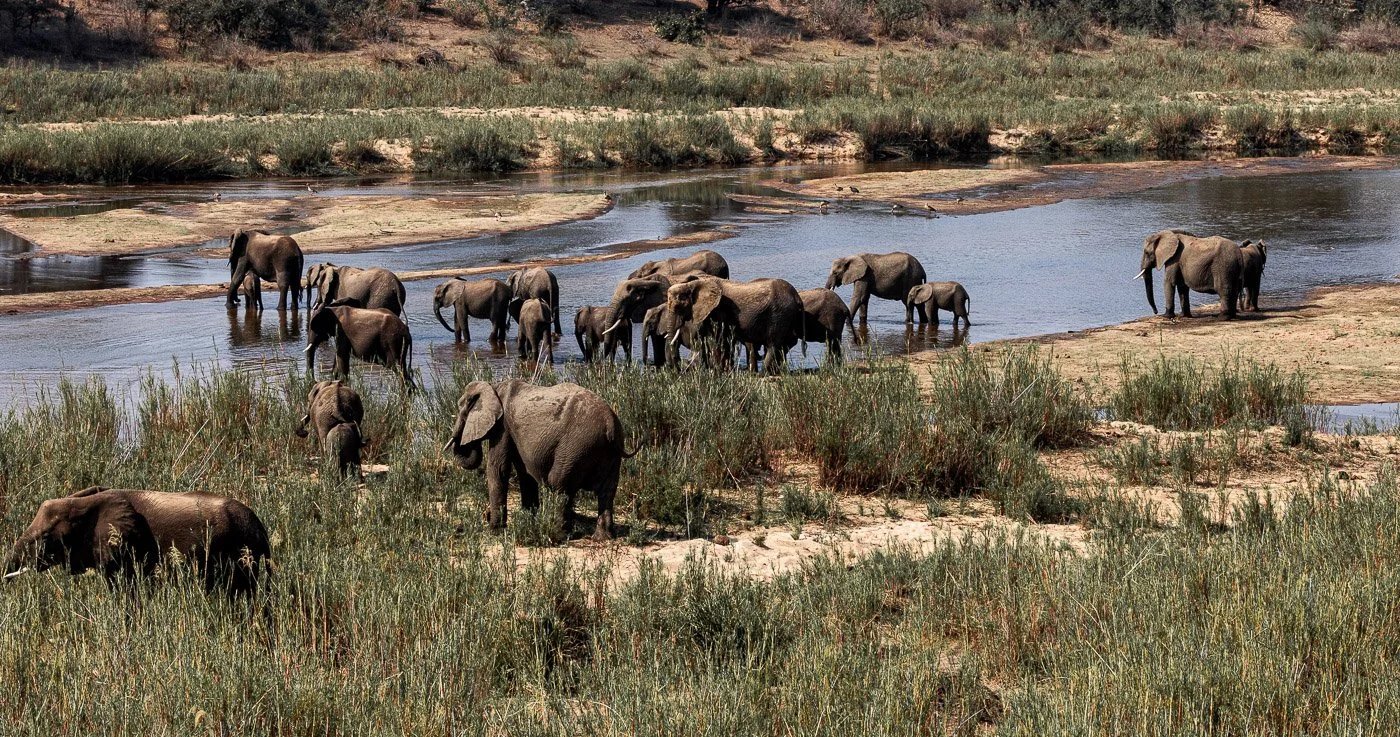
It was the last 3 nights of our Kruger tour and we eventually ended up at Lower Sabie rest camp in the south, and I was really looking forward to showing the group this area as it has been super productive over the years. There was plenty of water in the Sabie River, with everywhere else extremely dry, so it was almost guaranteed to be a hotspot for wildlife.
First up on arrival in the camp itself, I witnessed this Little Sparrowhawk hunt, kill, and eat a Laughing Dove.
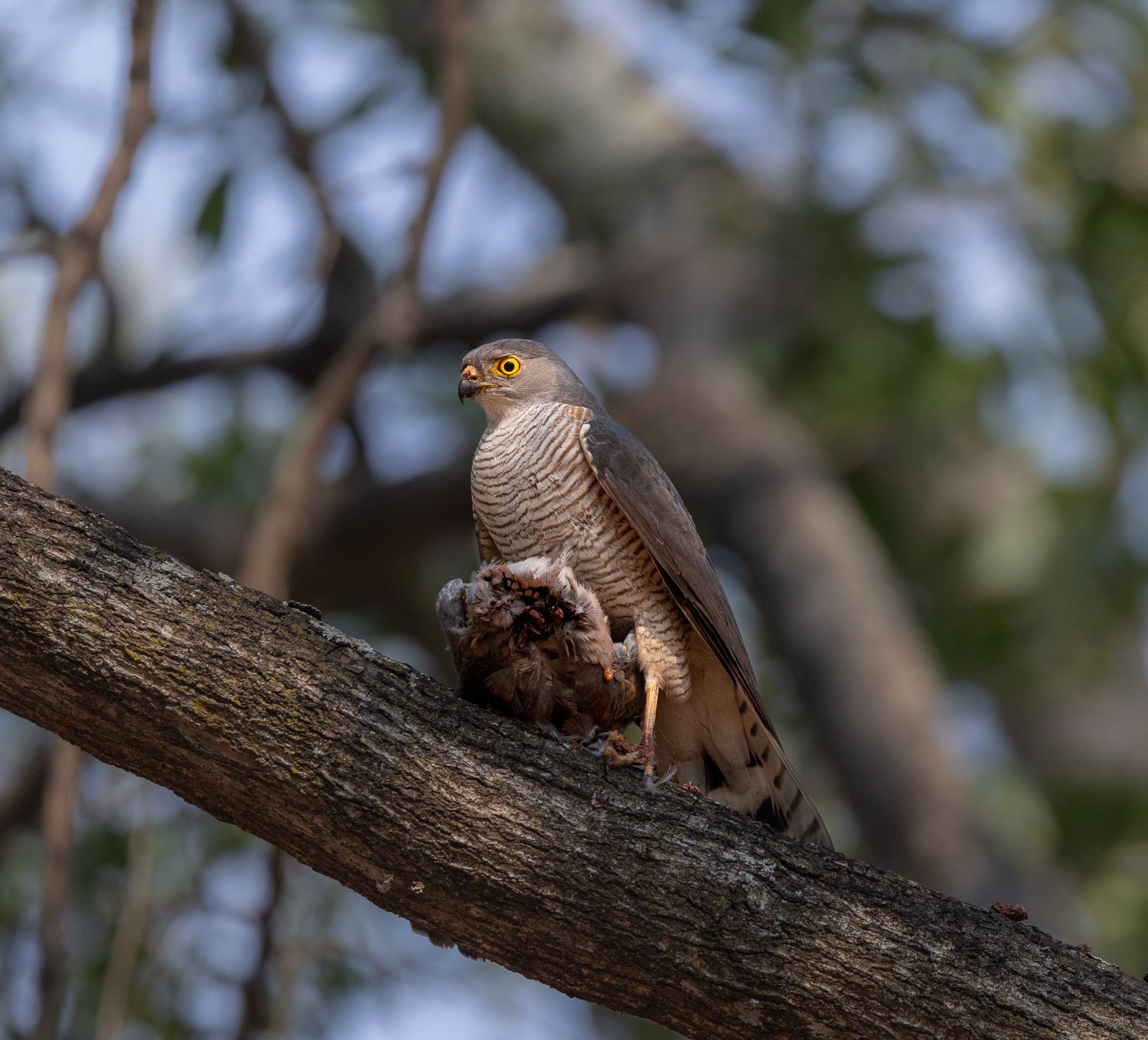
Little Sparrowhawk
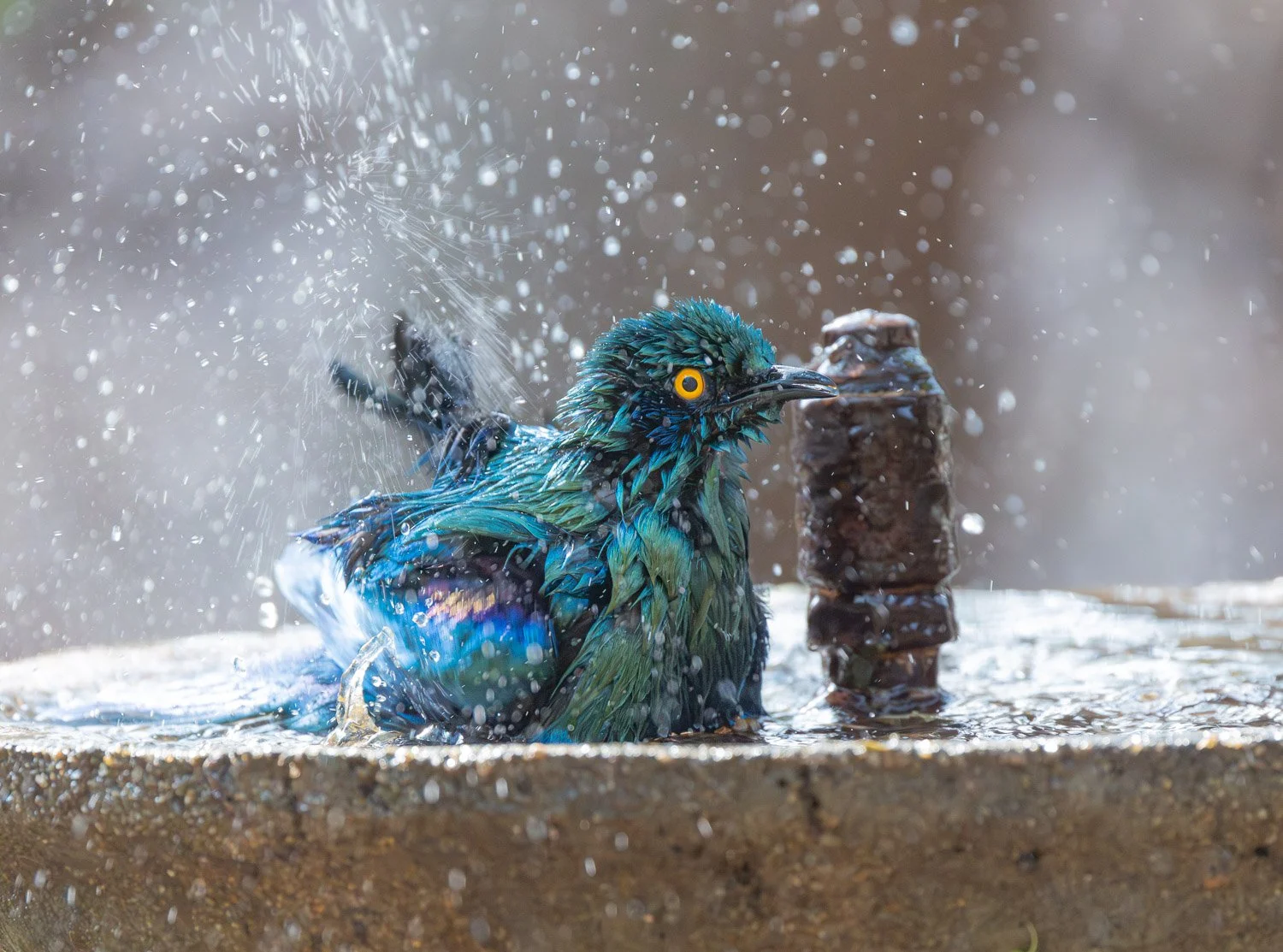
Then I got some arty shots of common birds bathing in a birdbath in the afternoon light.

With only 2 hours of light left that evening, we did a short ride out to Ntandanyathi Hide overlooking a watering hole. There was plenty of activity and we got close views of elephants drinking and bathing, as well as impala coming to drink scarily close to crocodiles.
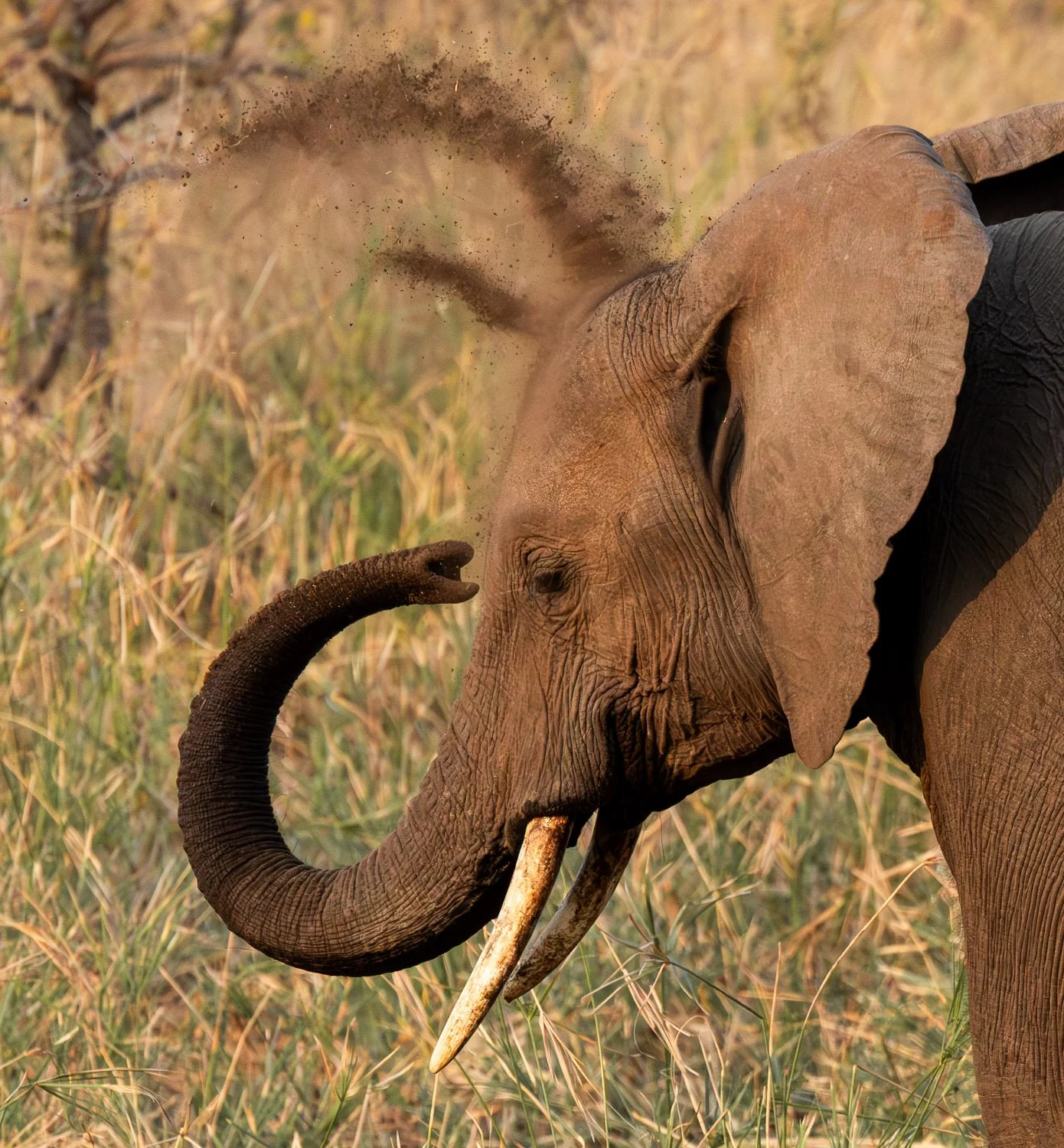
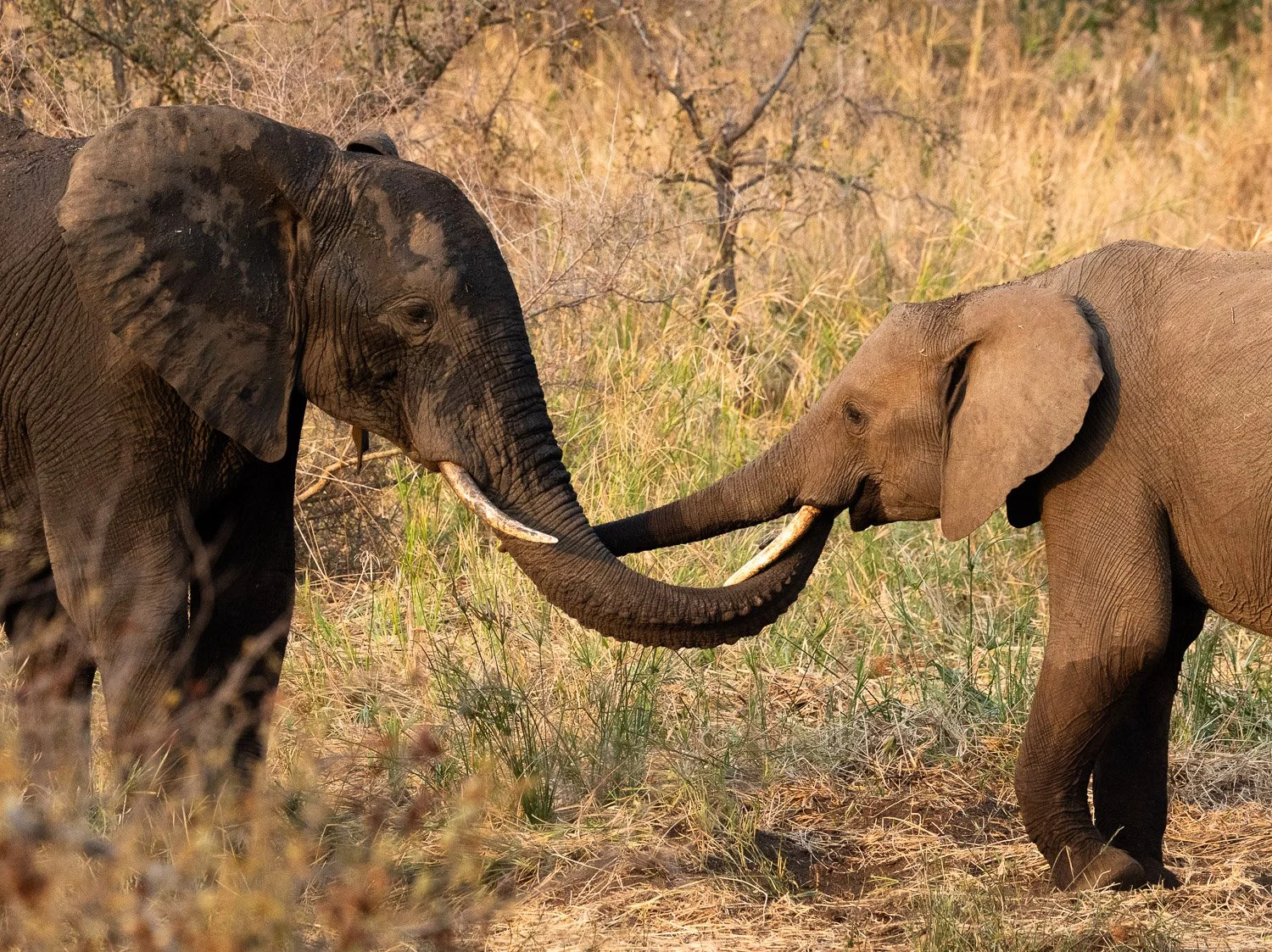
The same elephant as above greeting its friend or relative
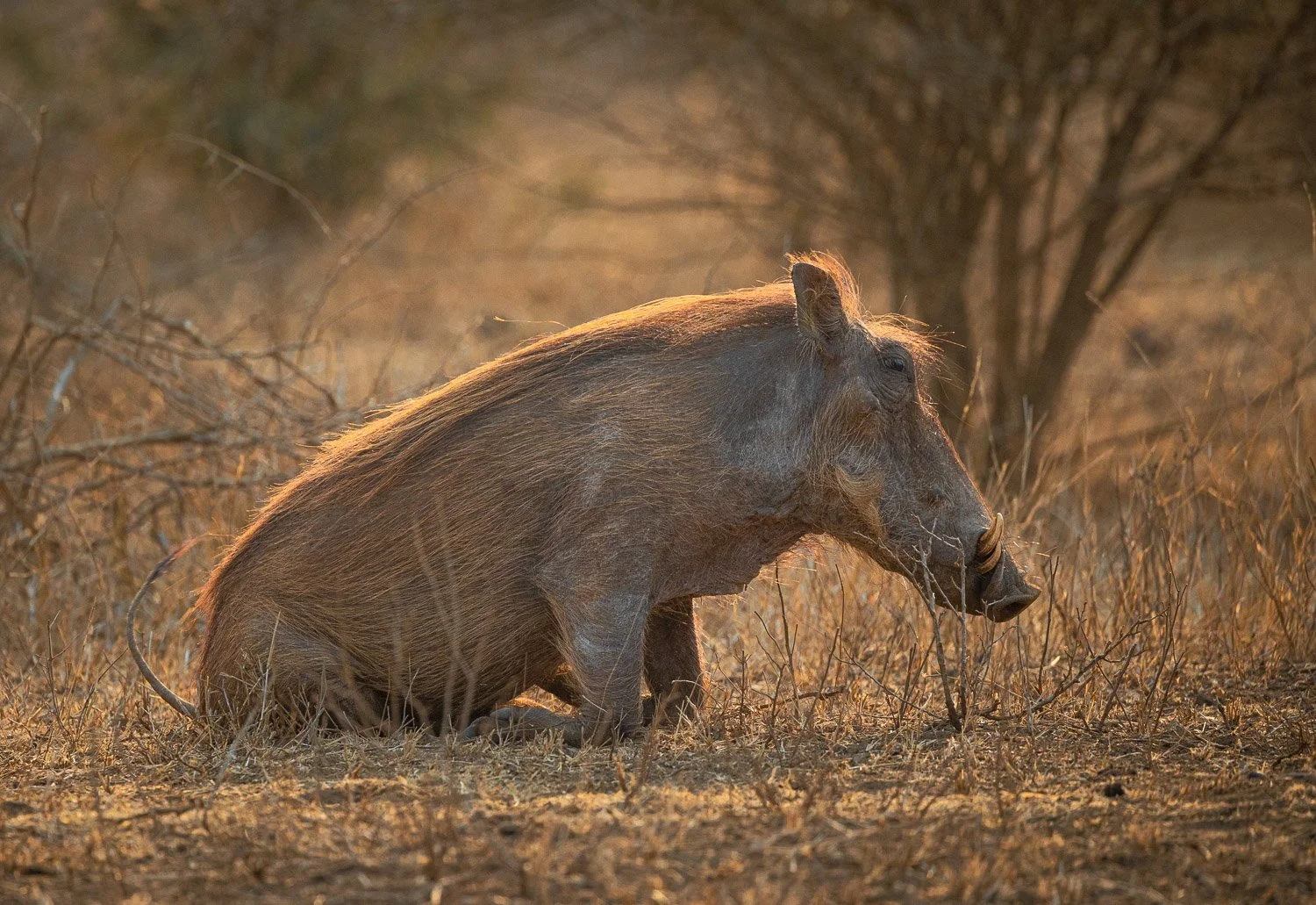
Warthog winding down in the afternoon light
Then on the way back to the vehicle in waning light we had a guy stop our vehicle and say, “If you are quick, there is a leopard in a tree overlooking the Sabie River,” so we hurried over there and managed to catch it quietly relaxing and waiting for nightfall. It was our first leopard of the trip, as we had really struggled to see them up north.
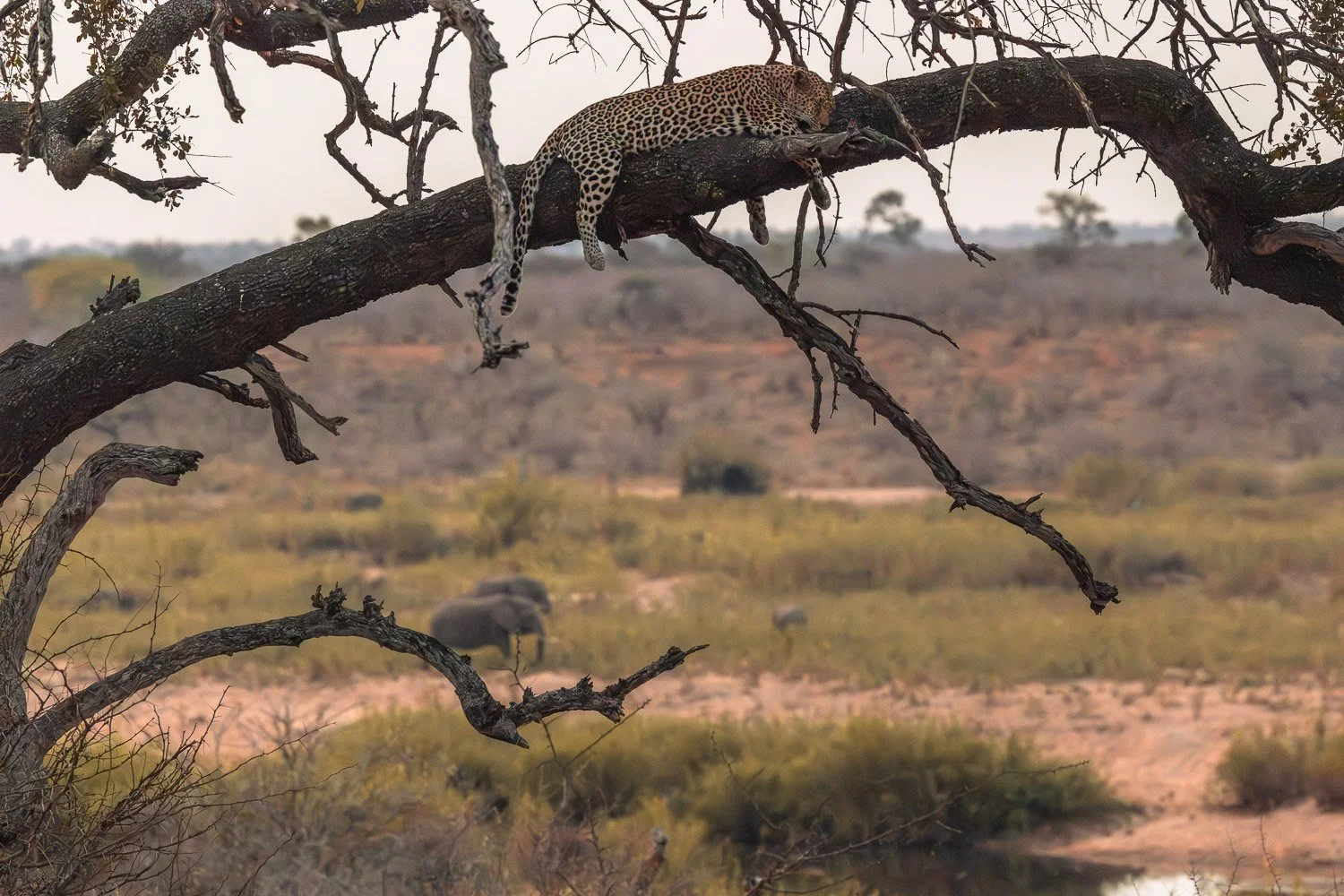
Classic Lower Sabie scene with the river Sabie in the background and a sleeping leopard

Leopard
The next morning we were on a SANParks sunrise drive in one of their huge safari vehicles. It was a slow start really, but it started to pick up as it got hotter. We had a very brief view of a Honey Badger, then a Secretarybird having an altercation with a Marabou Stork. Then this lovely Black-bellied Bustard female, and we finished the trip with a nice pride of lions relaxing near the camp.
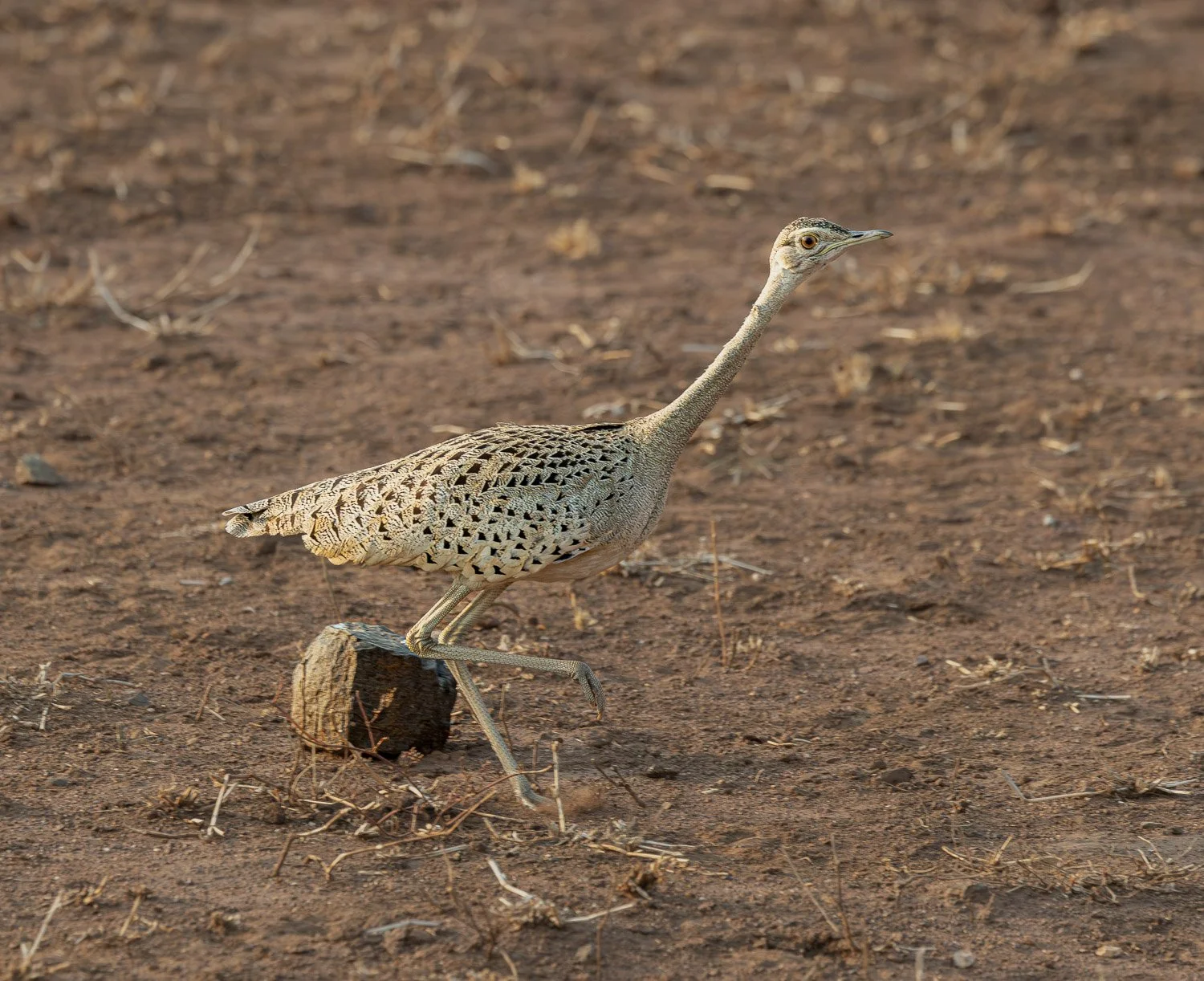
Female black-bellied bustard
The rest of the morning I spent walking the grounds of Lower Sabie rest camp and managed some half-decent shots even though the sun was far too bright and was burning all my images.


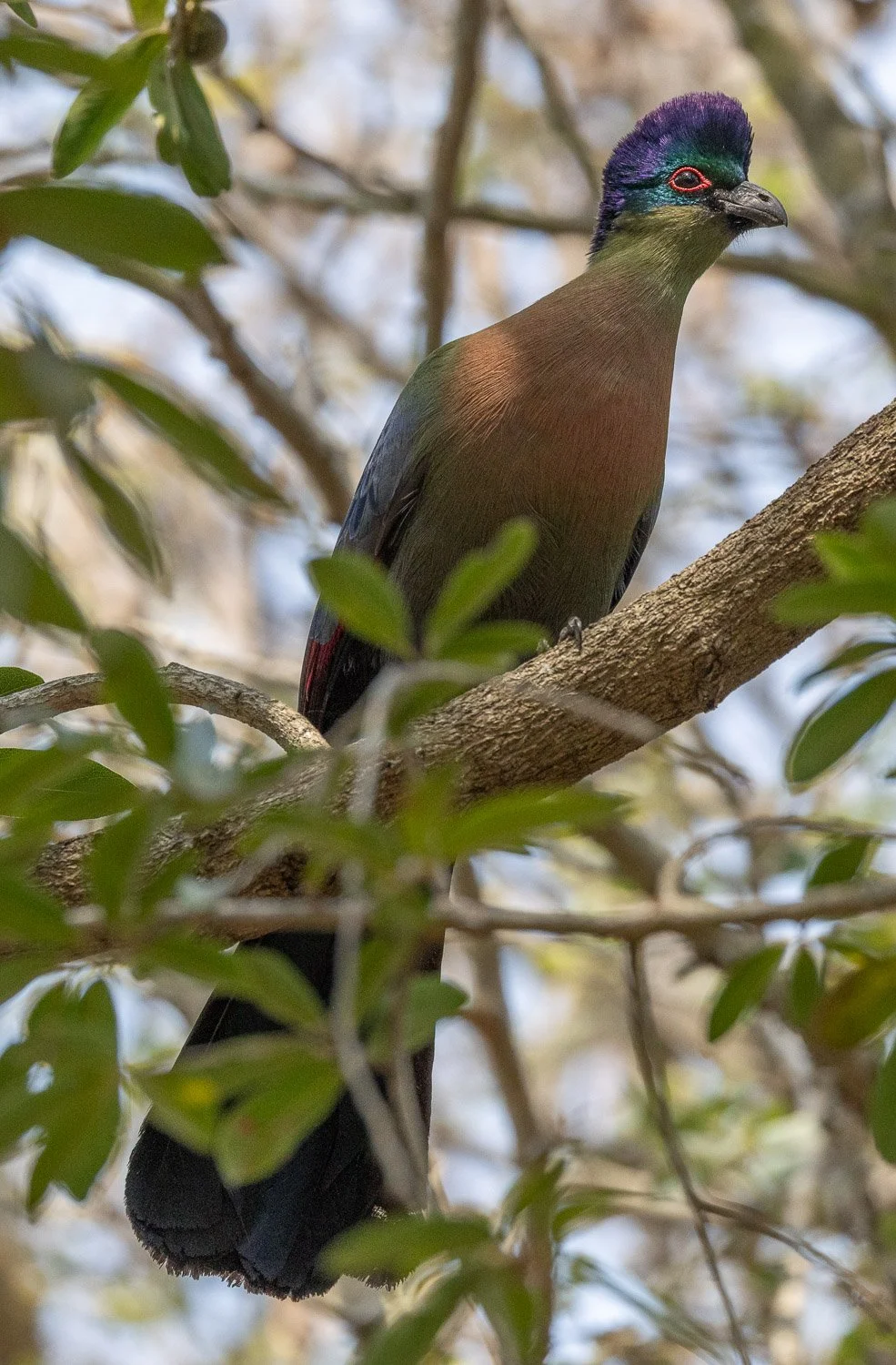

I reached the far perimeter of the camp on foot and heard impala barking on the other side of the river so I knew there was a predator somewhere but thought it would be out of view. Then 3 lions just walked out of the bush and along the river on the hunt. They even looked directly at me; thankfully, I was behind an electric fence. Probably my best sighting whilst walking around a camp in Kruger.
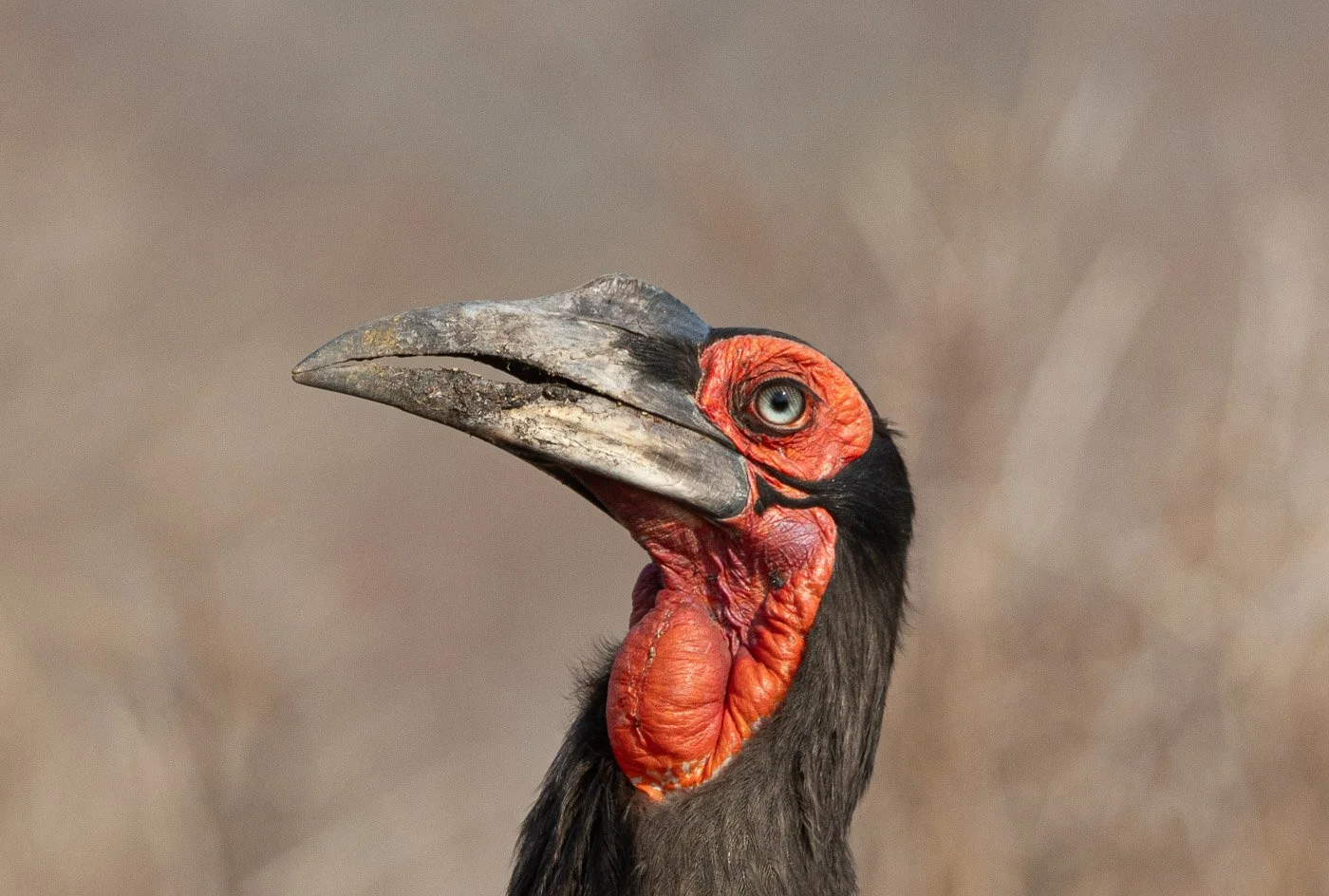
It was afternoon and the sun was getting lower in the sky so it was time to get back out and search for things. The first sighting was a family of Southern Ground-Hornbill foraging close to the road. There were about 7 birds comprising 4 adults and 3 fully grown juveniles that were relentlessly begging from the parents. They were incredibly needy and it was an interesting dynamic to witness. The whole family spotted a Tree Agama lizard and they were obsessing over trying to catch it. They wouldn’t give up and kept flying into the top of the bush to try to get an angle on it, but the lizard was smart and somehow managed to escape the hawk eyes of the parents. The hornbills even pretended to walk away, then immediately went back to try to catch the lizard. Fascinating behaviour from these primitive-looking creatures.


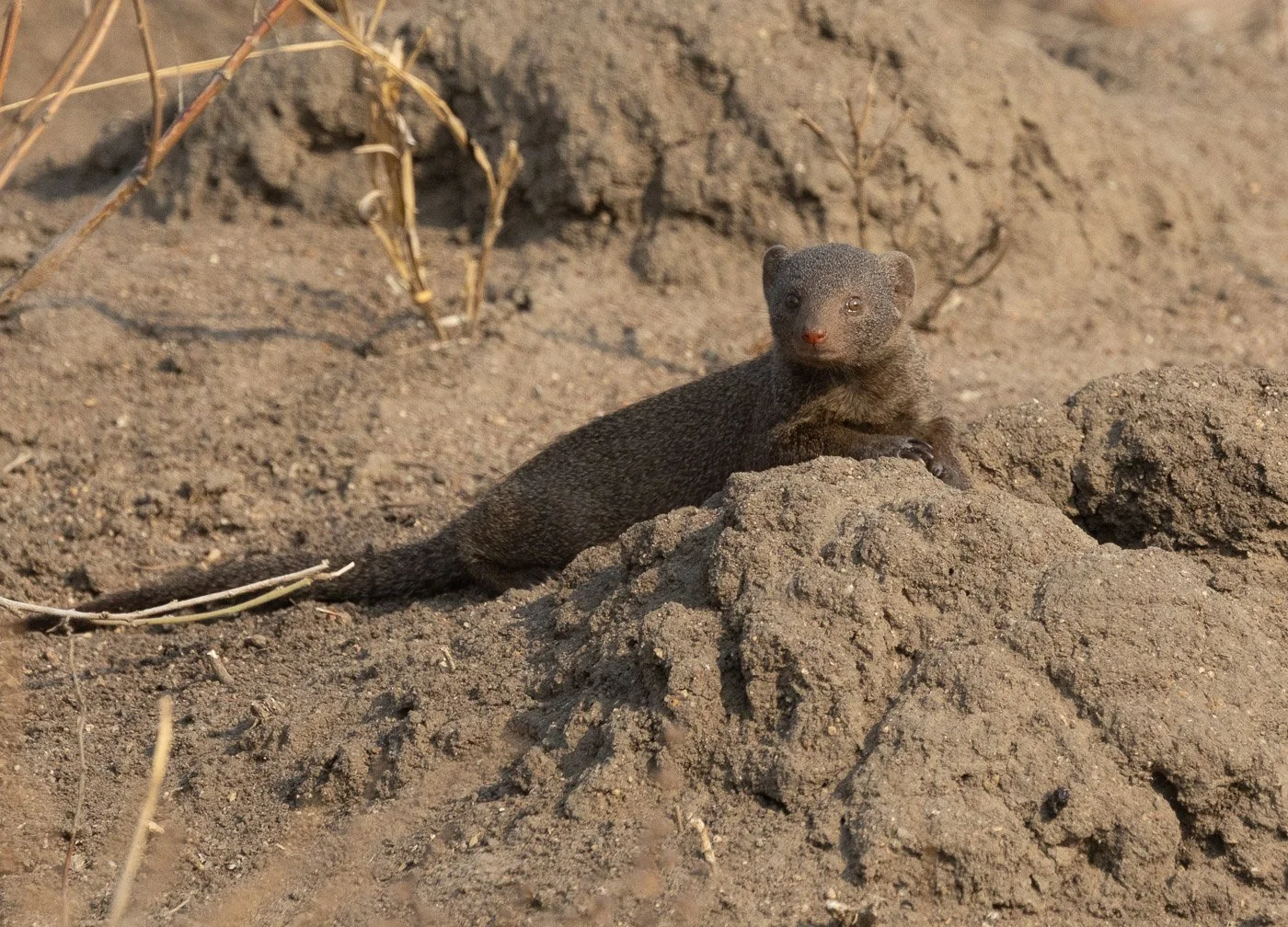
We took the S21 dirt road in order to get to Mathekeyane Outcrop for sundowners. I have to say the road was really unproductive and extremely dry with very few sources of water, so I am guessing most things had moved out of the area. We did manage to get good views of a young Bateleur, a Slender Mongoose, and a small group of Dagga boys.
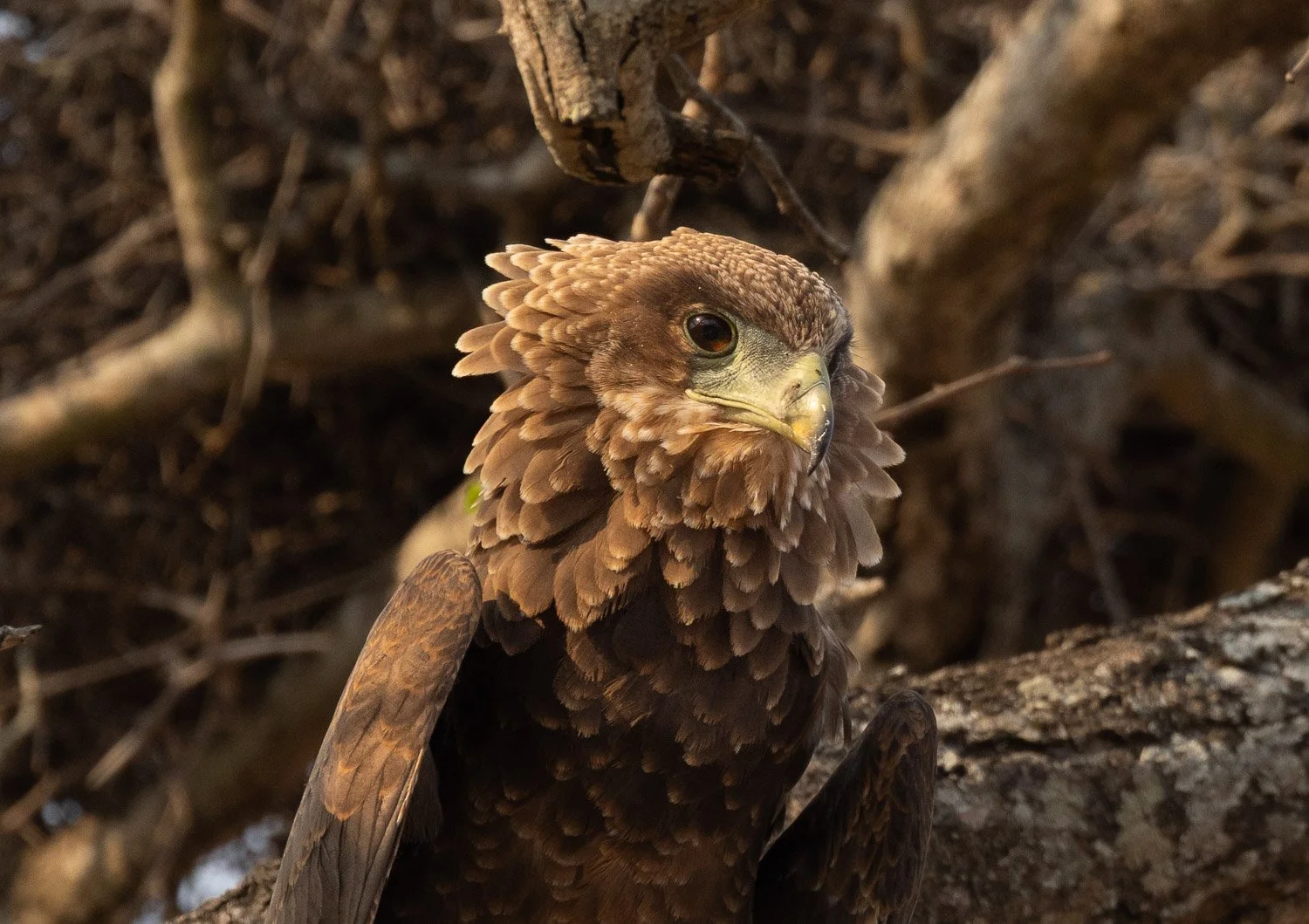
Juvenile Bateleur
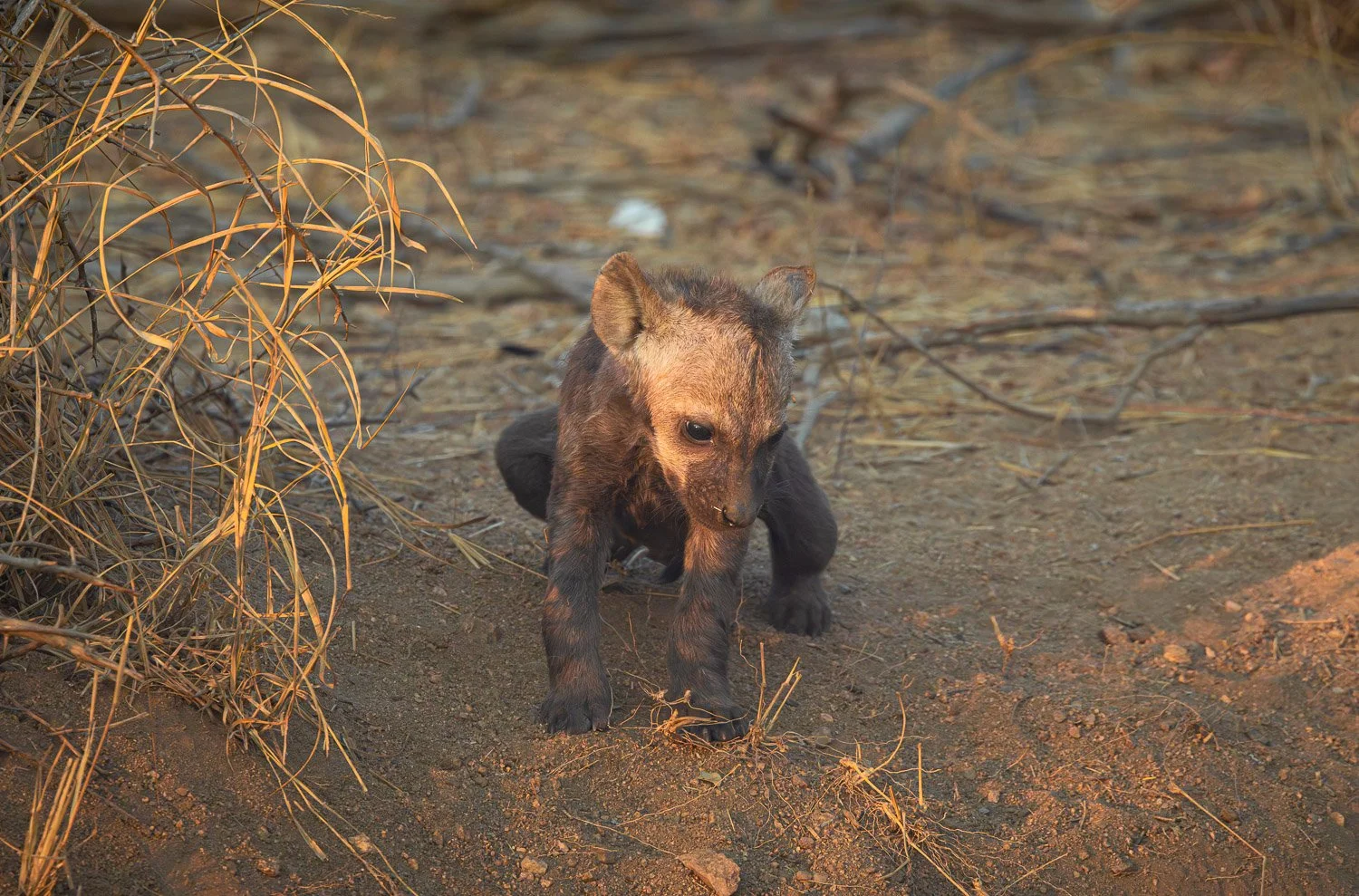
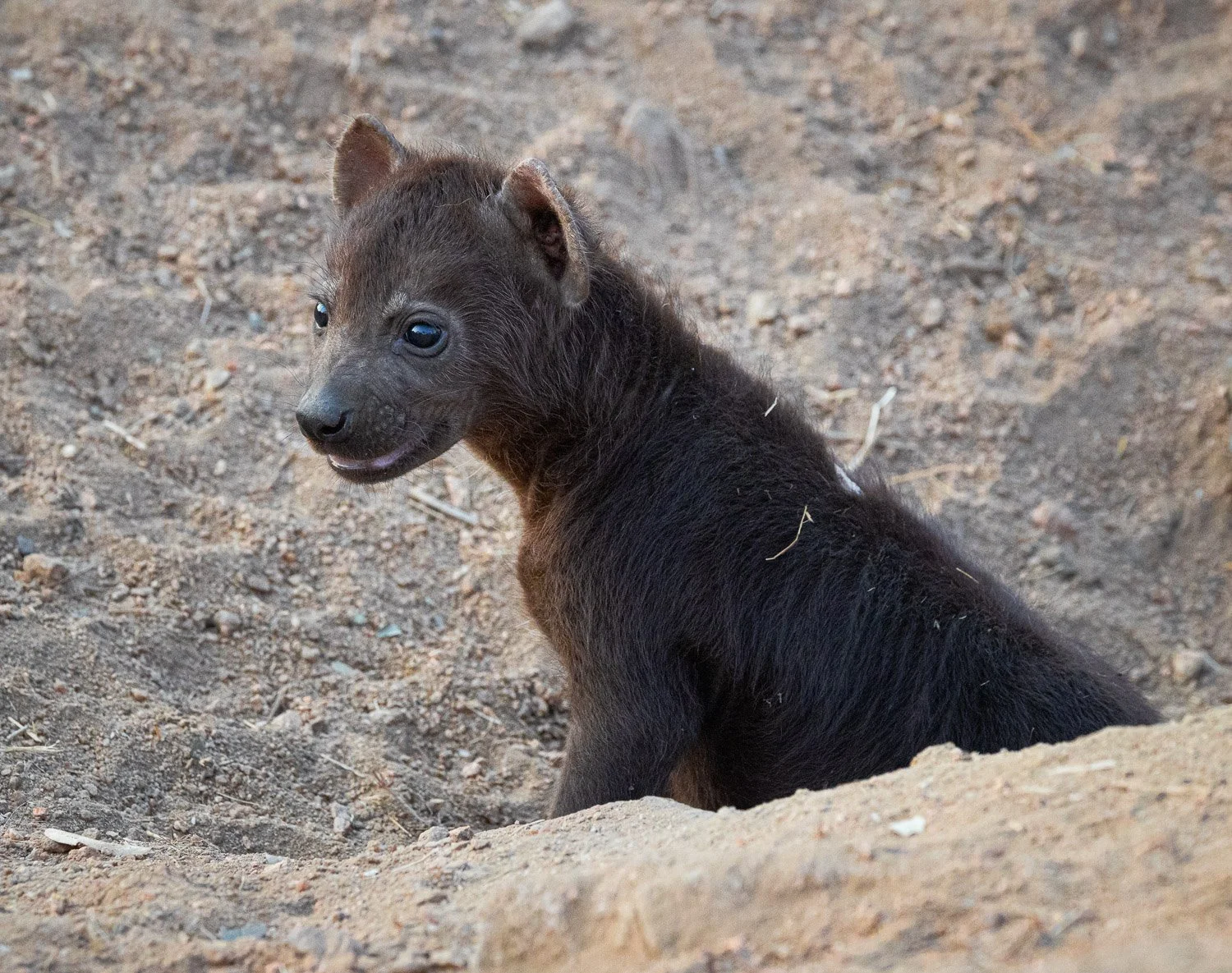
After some lovely Amarula sundowners, we headed back on the tar road for the last bit of light, and things started to get exciting. The first thing we came across was this large family of hyena with lots of young at different ages. It was great to watch all the different interactions and infighting from the tiny pups who could barely walk but were fighting over a twig.



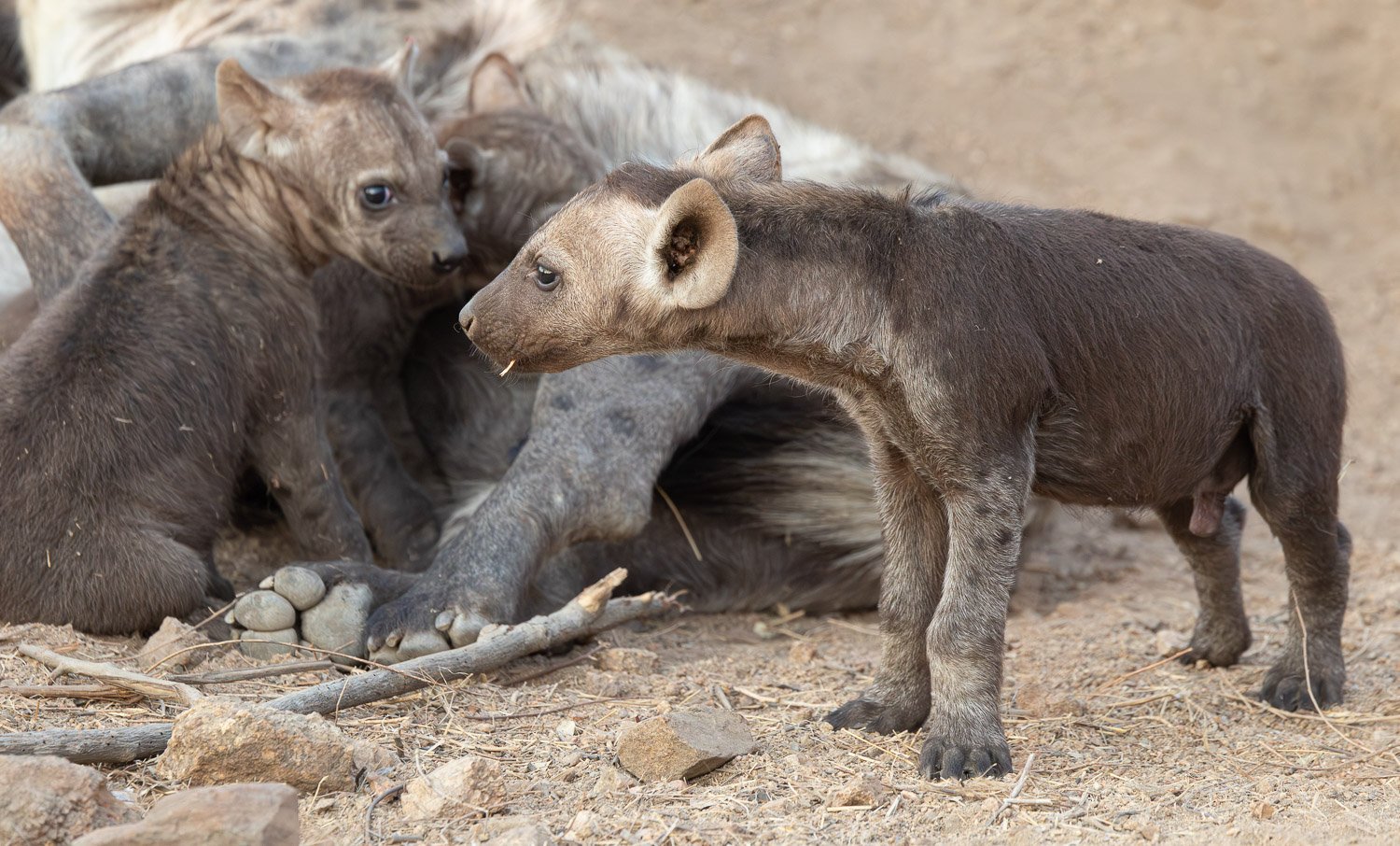

We couldn’t spend too much time there as we needed to be back for 6 when our gates closed, so we headed off and were instantly stopped by a massive roadblock. People pointed out a leopard, then someone else said there was another leopard — so 2 leopards, one on either side of the road. Both active and scent-marking etc. It was pretty chaotic with all the traffic moving and not knowing which one to point my camera at. It was difficult to get an angle so I didn’t manage any decent shots, but it was all about the excitement and experience.
The next morning it was our last full day in South Africa, and my mission for the day was to see a rhino as we had not seen one in the entire 9 days so far. Back in 2010, 2011 and 2012 I would see maybe 3–5 rhinos every day. Now zero. The poaching epidemic has really taken its toll on rhino and it has been visible in the short timescale that I have been visiting Kruger. A real disaster.
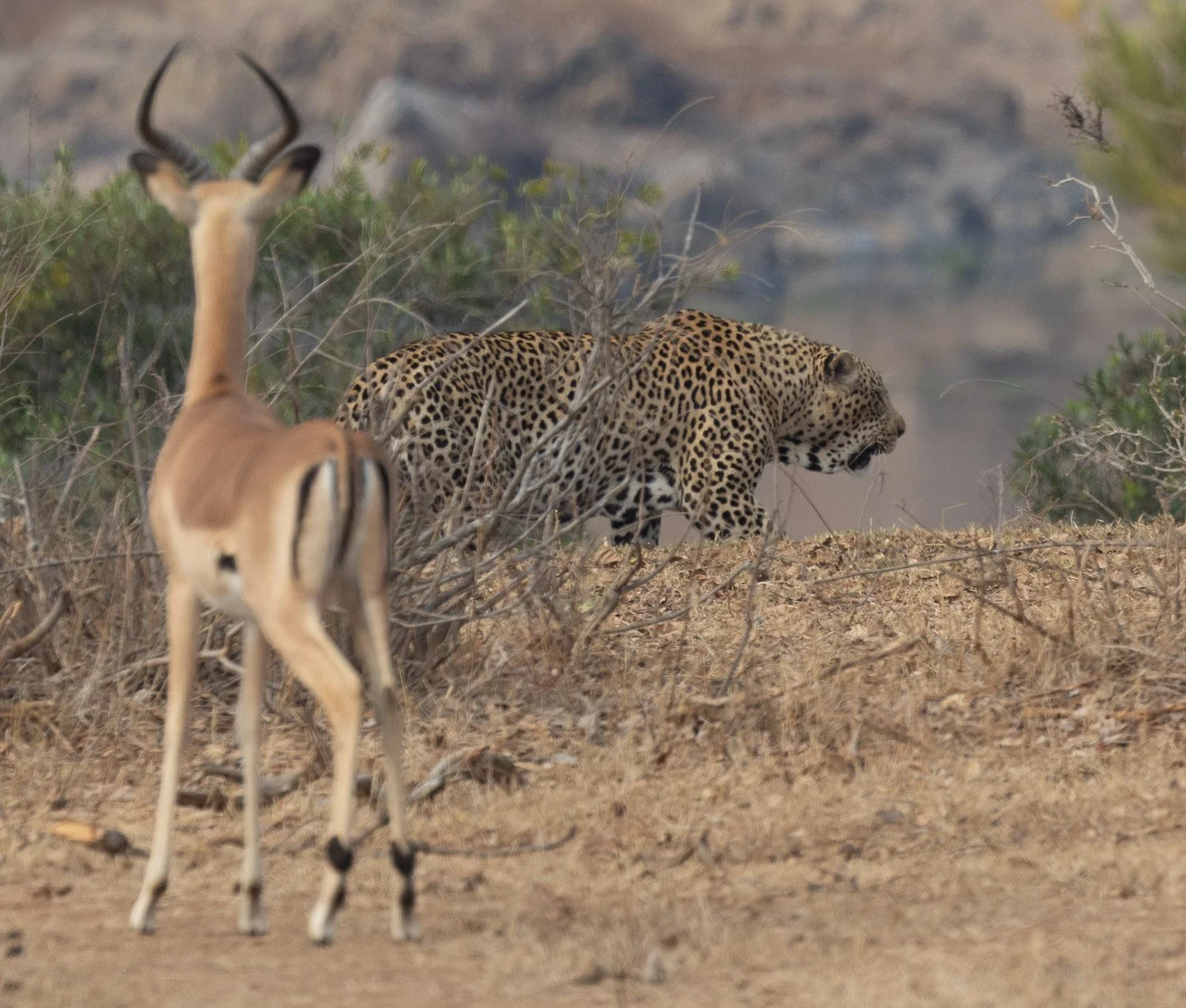
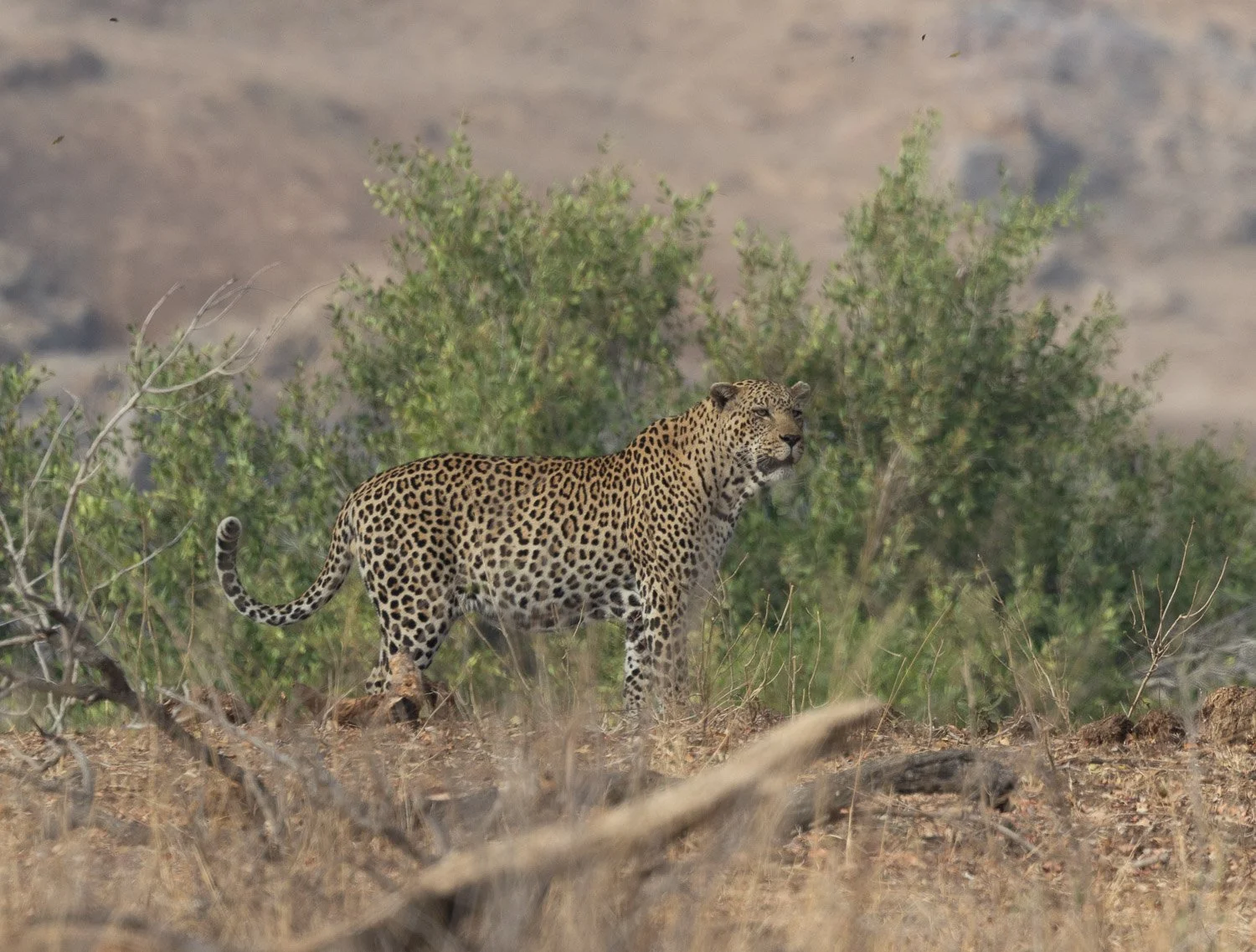
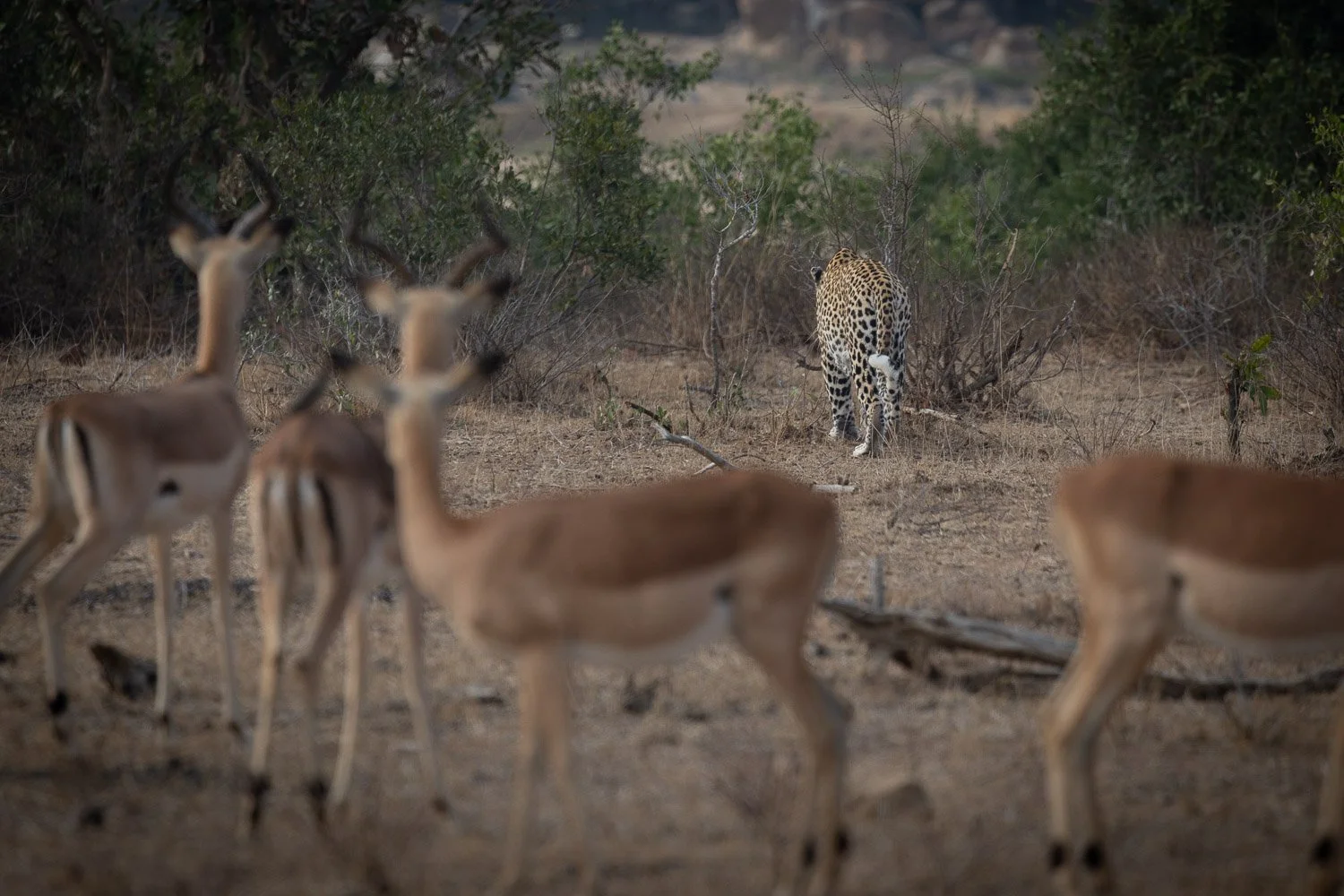
Anyway, we woke up to extreme fog in the camp. I was hoping the sun would burn through it and it would clear up, or maybe it was just isolated to our camp. But I was wrong. We drove for miles and you could hardly see the side of the road. Pretty disastrous really and something I have never witnessed in Kruger. We managed to get all the way from Lower Sabie to Gardenia in the far south before it cleared up — roughly 60 km or so. But as soon as it cleared, after a few hours, we were immediately rewarded. I saw a large herd of impala all staring in the same direction towards the edge of a large tree-lined riverbank. They were all doing their alarm barks as if there was a predator around. There were also vervets that had scurried to the very tops of the trees and they were also alarming. I knew it was leopard but we just couldn’t see down the riverbank and it was highly frustrating. A bit of patience rewarded us and this massive male leopard emerged, casually walking from bush to bush, scent-marking and sniffing all the bushes. The impala wouldn’t let him out of their sight and were going surprisingly close to him. This was probably my favourite sighting of the whole trip, as we used all our fieldcraft to detect the leopard, where most other cars would have just driven past the impala.

A quick stop at Gardenia hide got us more close elephants drinking and a few impala, then we moved on towards Berg-en-Dal in order to get lunch. On one of the dirt roads I spotted a distant blob of grey matter on a far hillside. I scanned with my binoculars and it seemed to be just a tree. But I kept scanning and out came a White Rhino. The only one of the trip. A really sad state of affairs. Looking at the population numbers, when I first started visiting Kruger in 2010, the population estimate was 10,621 White Rhino. The last known survey in 2023 estimates there are now only 1,850 left. I really can’t get my head around that. What a disgrace we are, letting this prehistoric animal that has roamed the Earth for millions of years get decimated in just over one decade. It’s ludicrous.
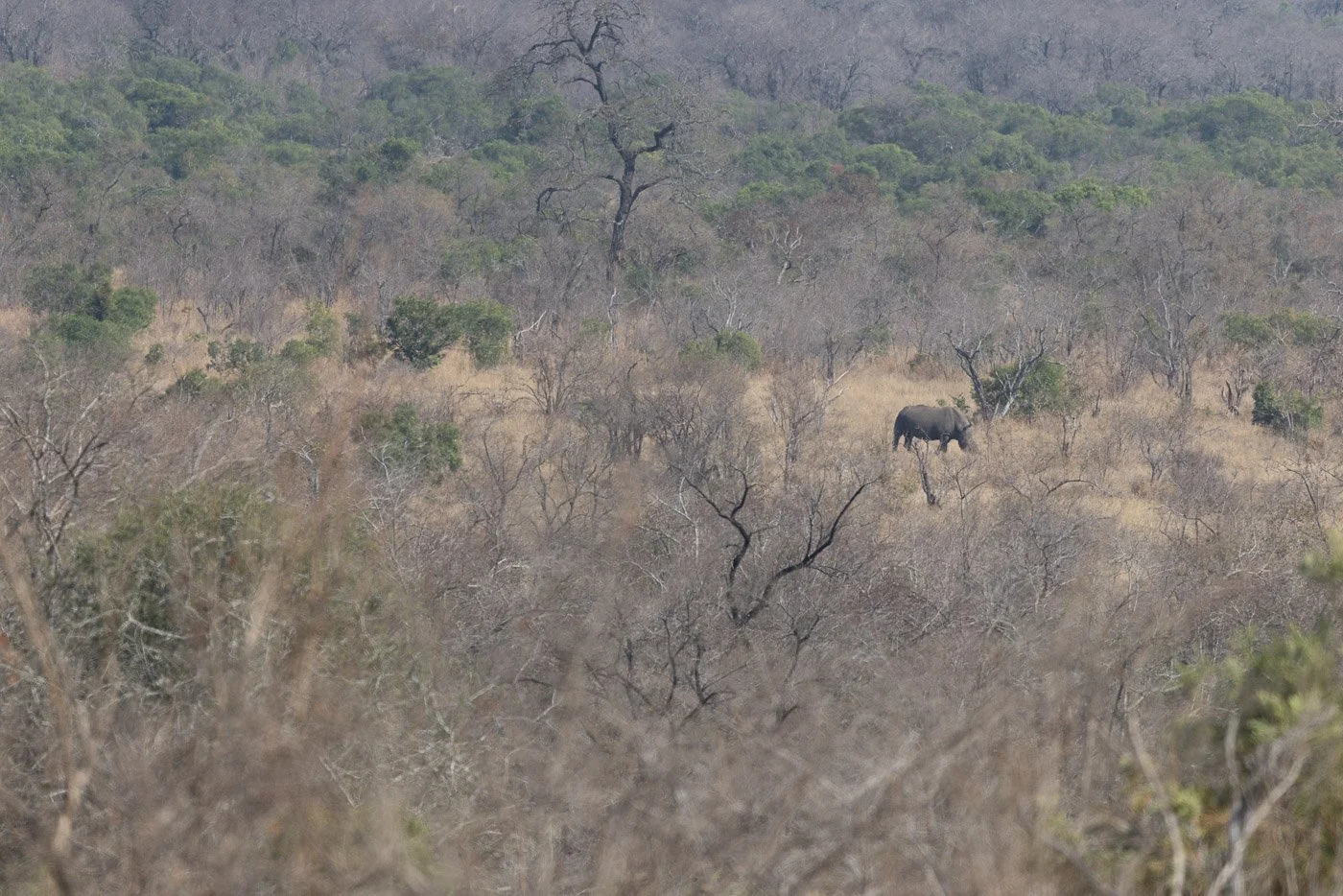
The 1 and only rhino in a 10 day trip in Kruger
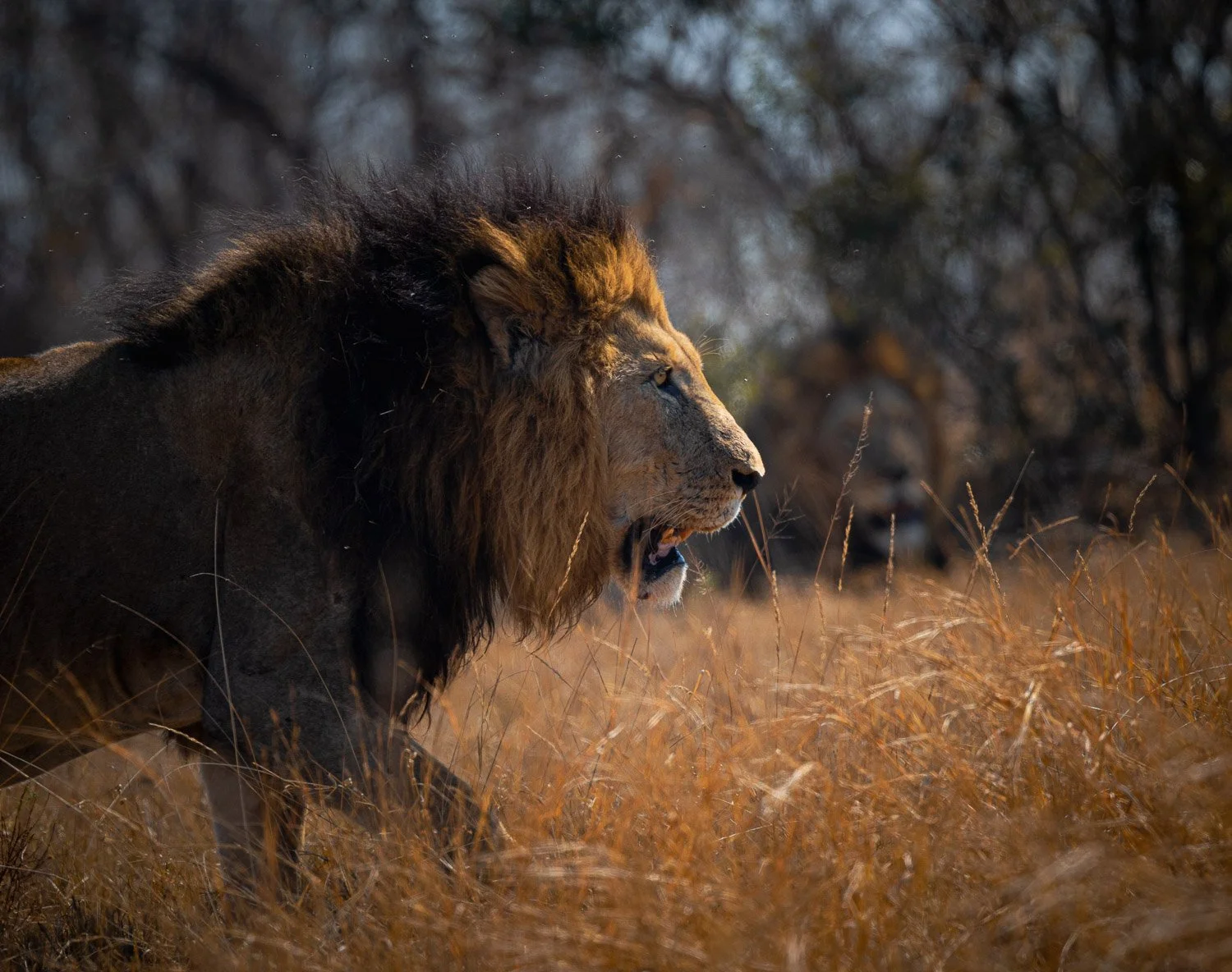
Anyway, rant over. On the approach to Berg-en-Dal, we had 2 big male lions trying to find shade from the sun, one even having a little frolic in the sun. A stop at Matjulu waterhole produced this White-fronted Bee-eater catching a locust, this random cliff-side elephant, and a Leopard Tortoise.
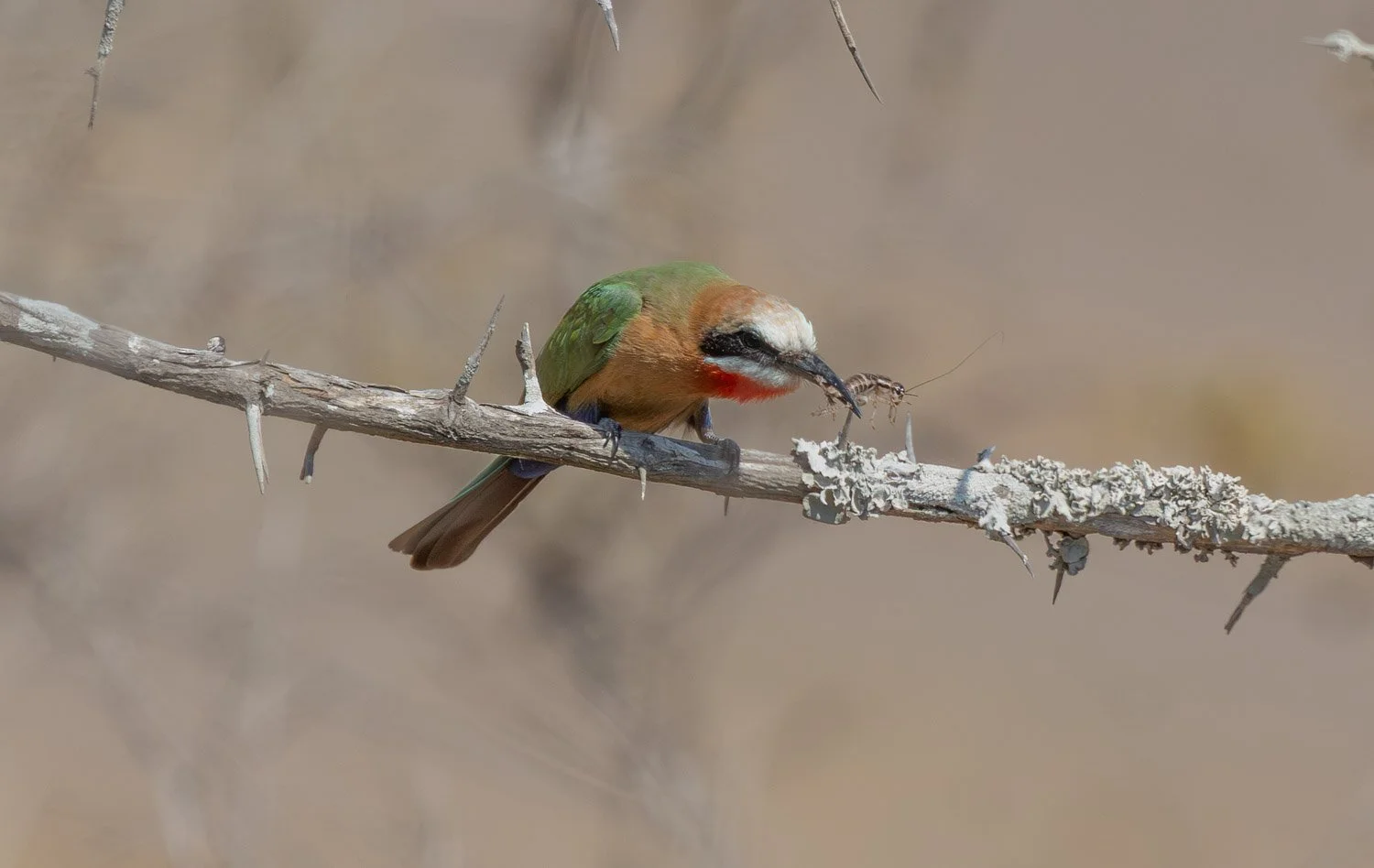
White-fronted Bee-eater
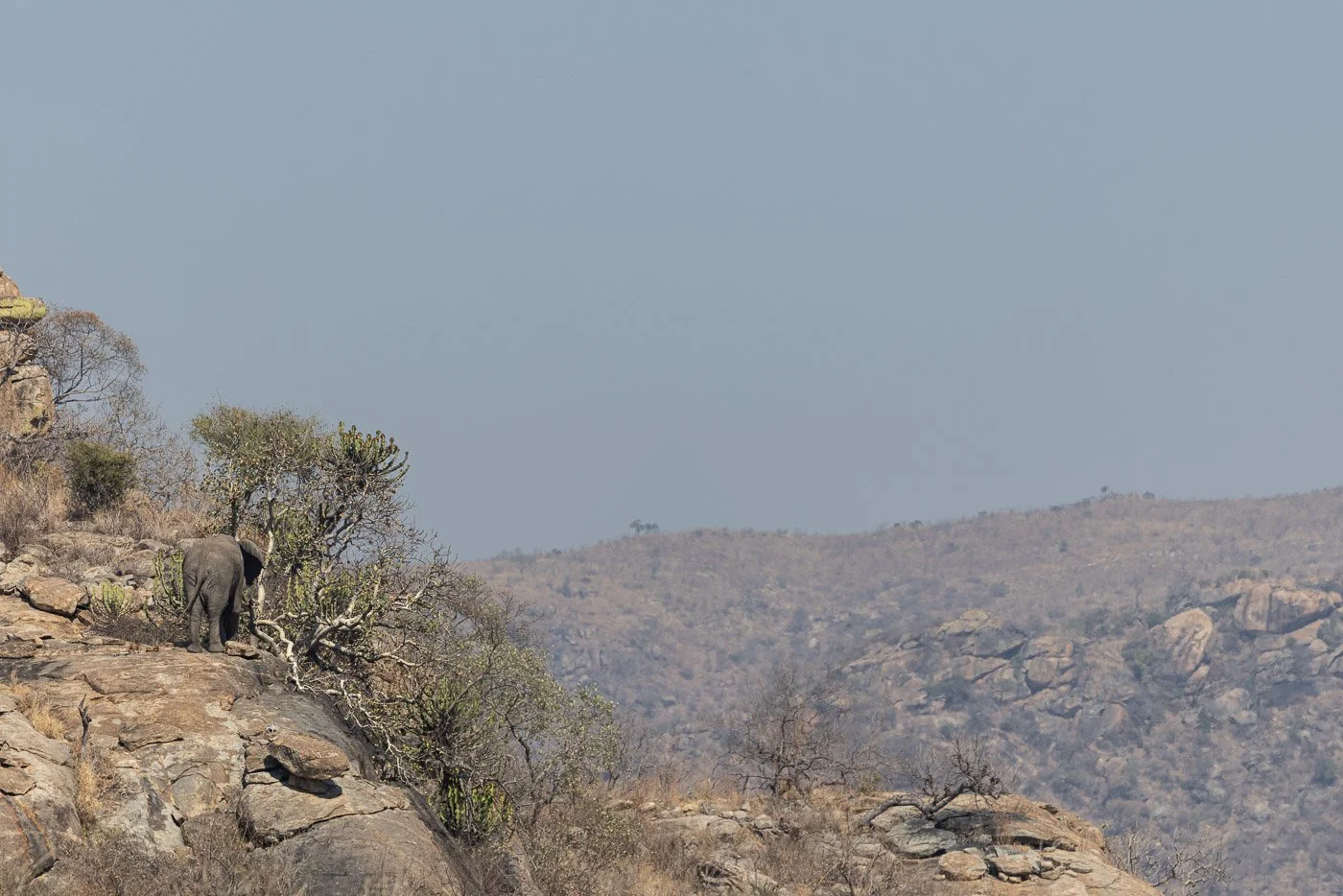
An elephant on a cliff
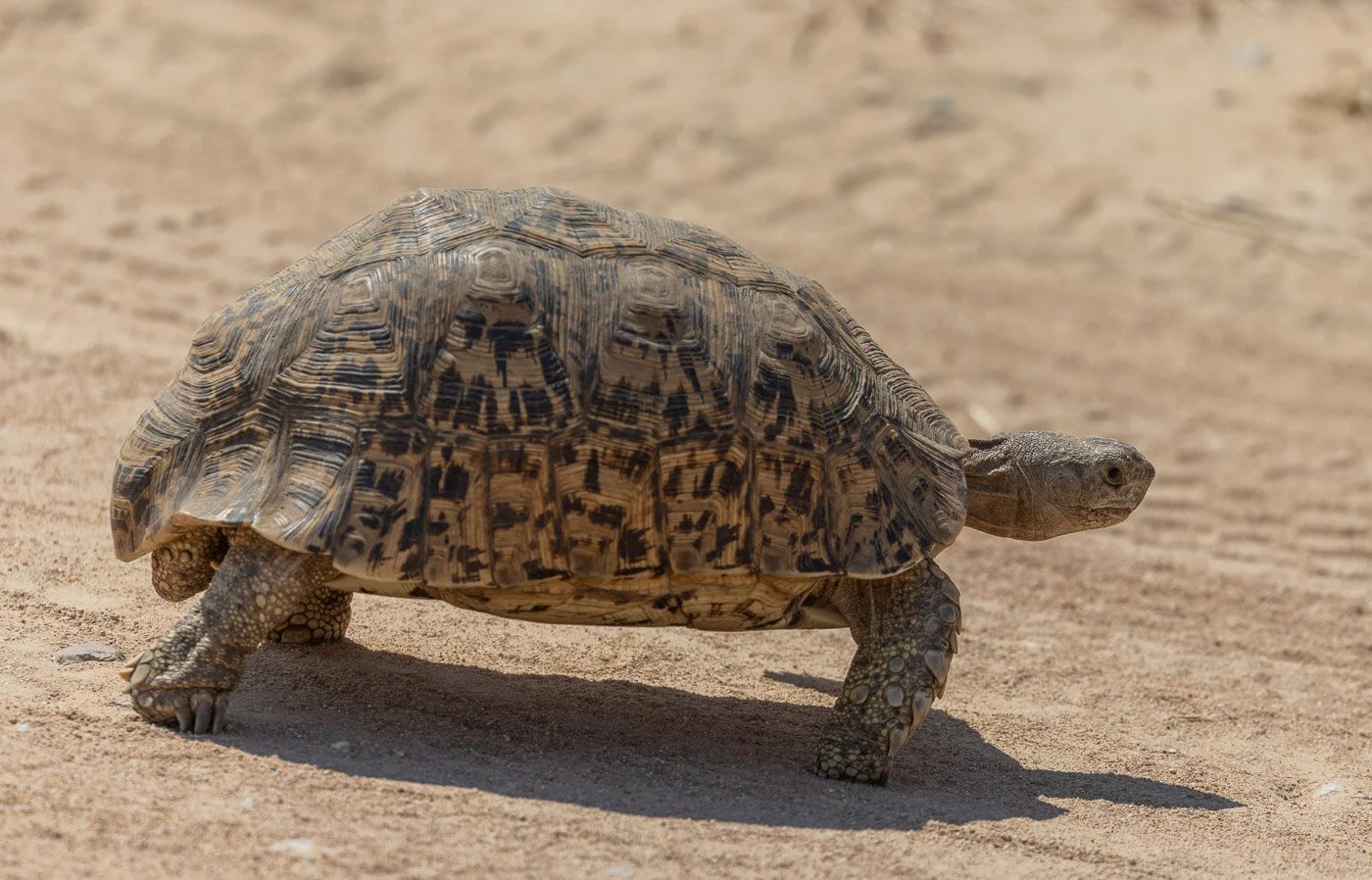
Leopard tortoise
After Berg-en-Dal, we headed up the tarmac H3 and went the long but smooth way back to Lower Sabie. The aim was to parasite off other people’s sightings as it was the last hour of the safari so we would see what we could see. A few people were watching a leopard that had just eaten an impala and left its head and legs strung up in a tree. We had a good scan but couldn’t see the culprit.
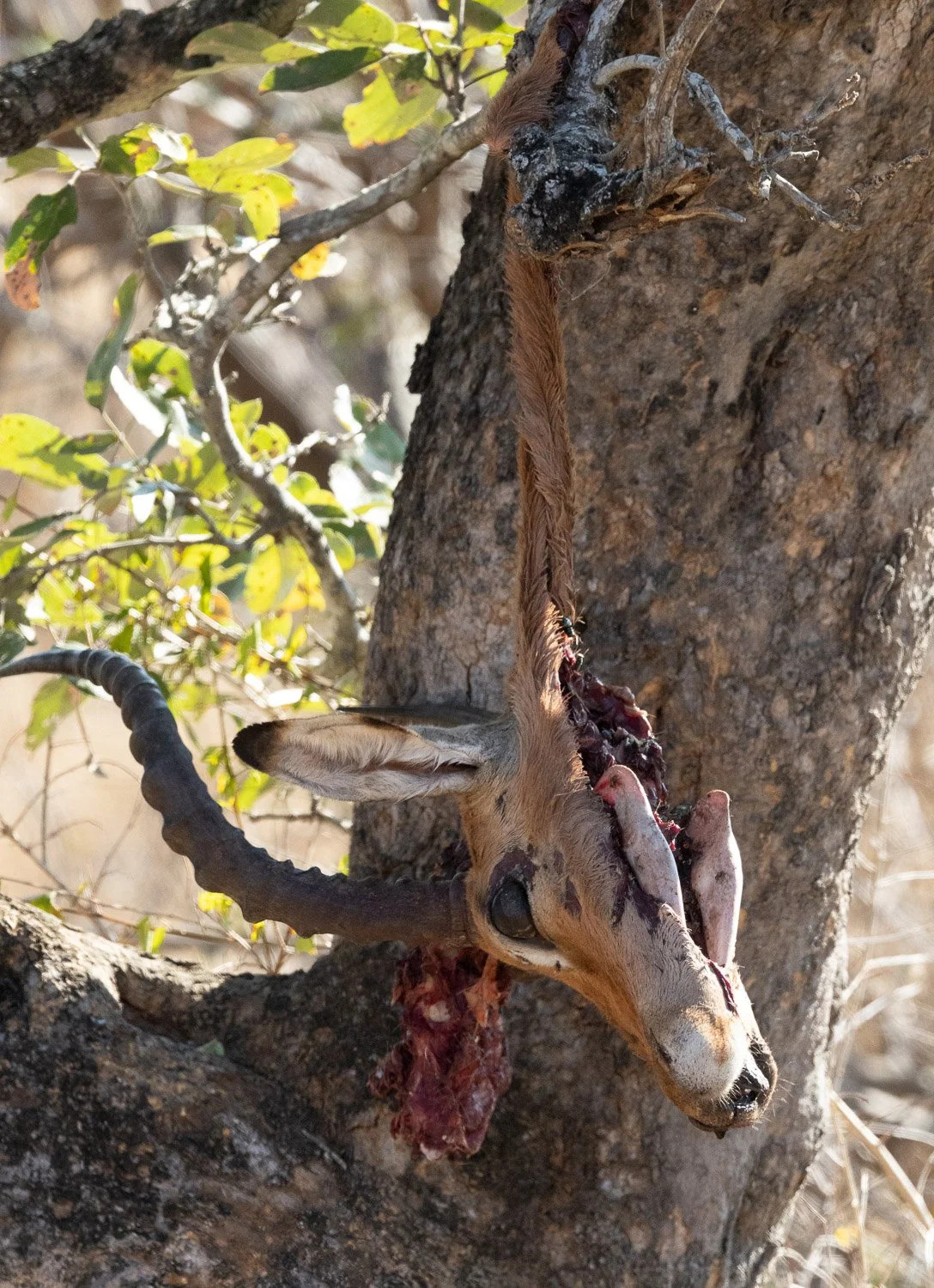
Impala killed by a leopard up a tree
We reached the bridge at the junction of the H12, and it was busy with parked cars. Then 2 female lions came walking down the dried-up river. Both with swollen teats, which said to me they were suckling young cubs. We followed them up the river with the binoculars and they retreated into dense cover, which is where I am guessing the cubs must have been.
Moving closer to home, there was another multi-car pile-up, and another driver pointed out 3 wild dogs on the other side of the banks. A bit distant but a first for the trip and a great addition to our tick list.
The morning after, it was time to head to Skukuza Airport to give our 4x4 back. But as always in Kruger, there were a few last-minute treats. This herd of elephants having a mud bath was a great thing to witness. A lone male came in to have a bath but was quickly told off by the matriarchs who all chased him off. Poor guy wasn’t really doing anything wrong. Then another pride of lions, a leopard, and 4 wild dogs. Kruger — what an amazing place that is!
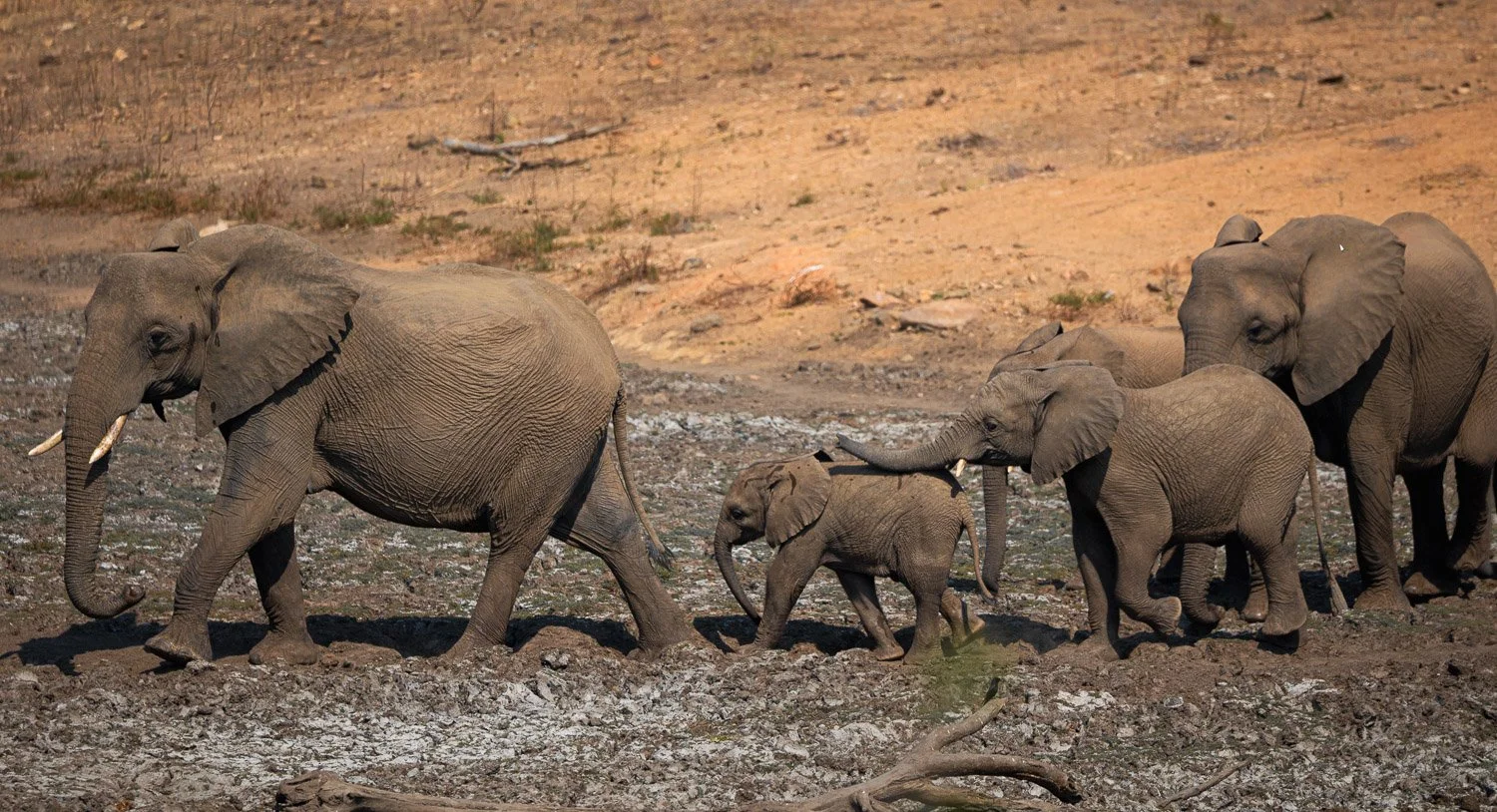
Elephants on their way to a mud bath
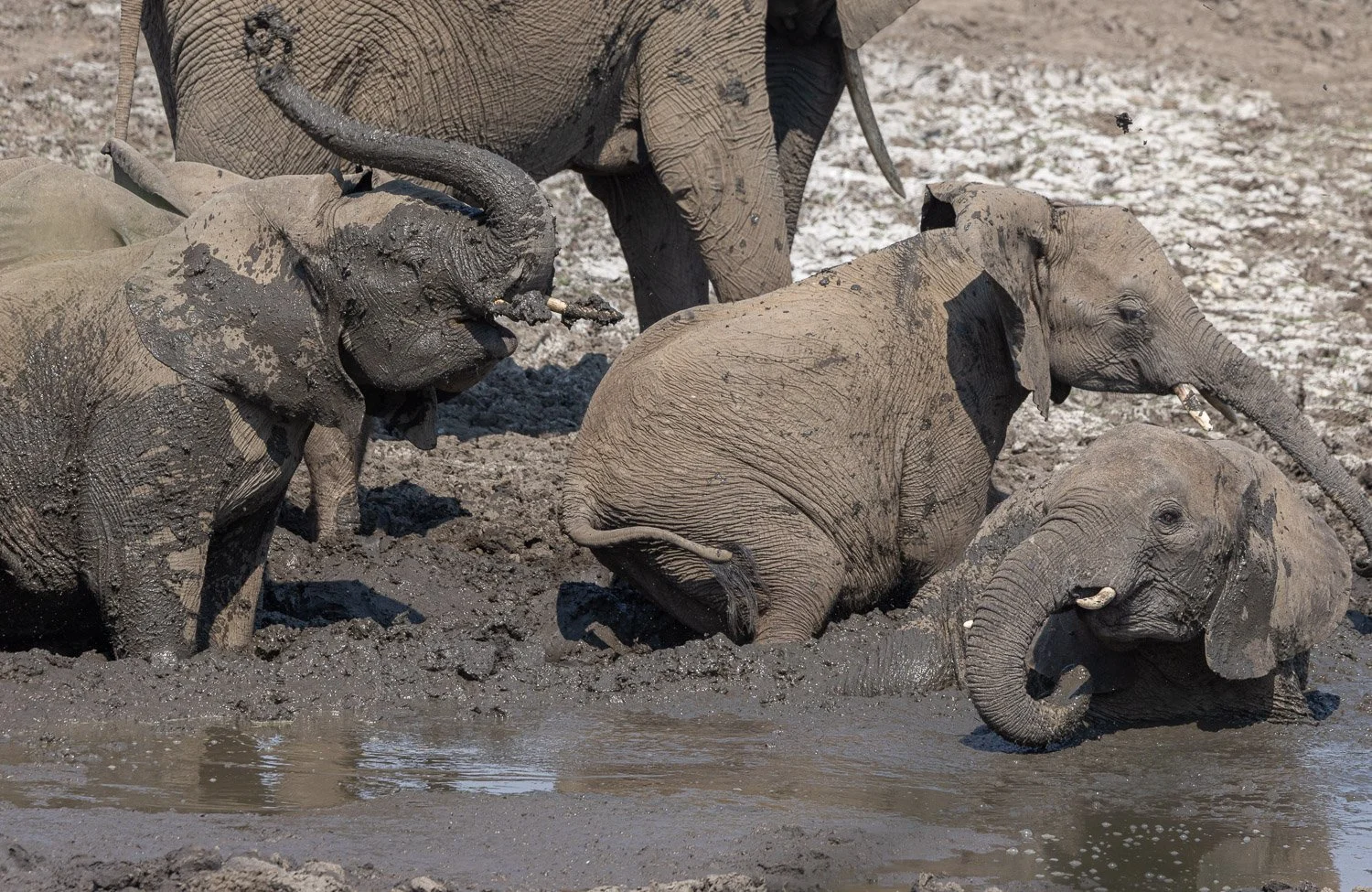
Elephant mud bath
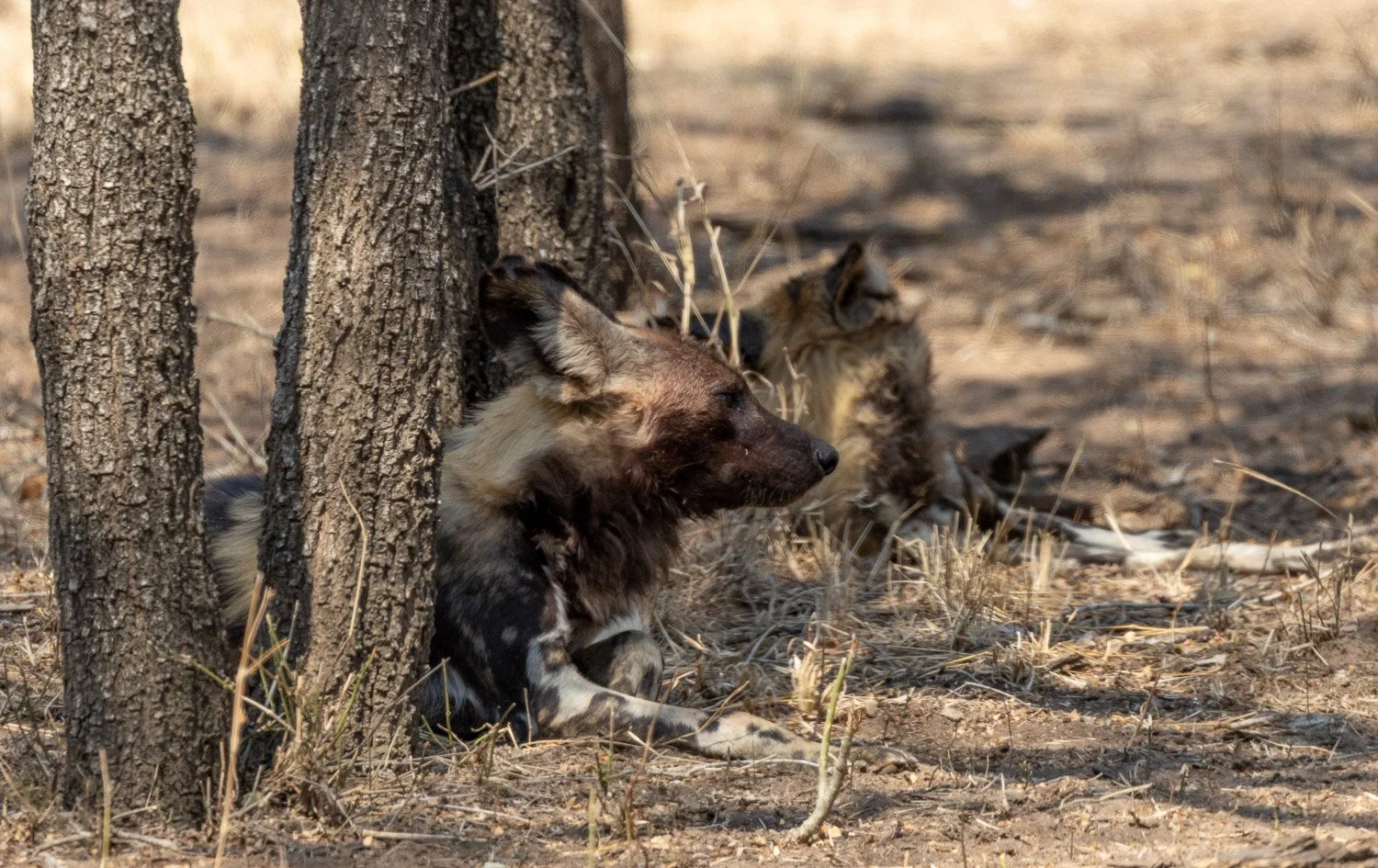
African wild dog
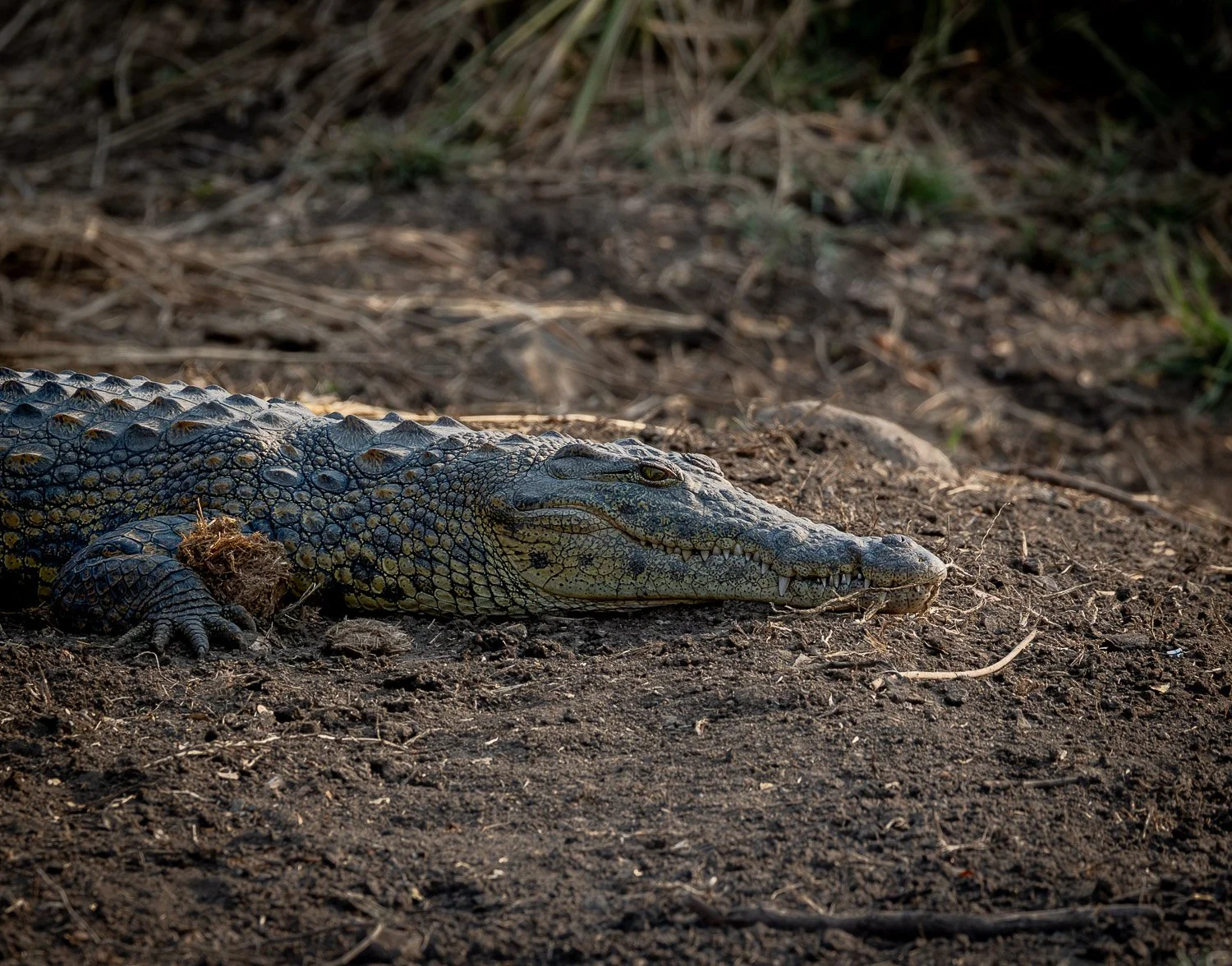
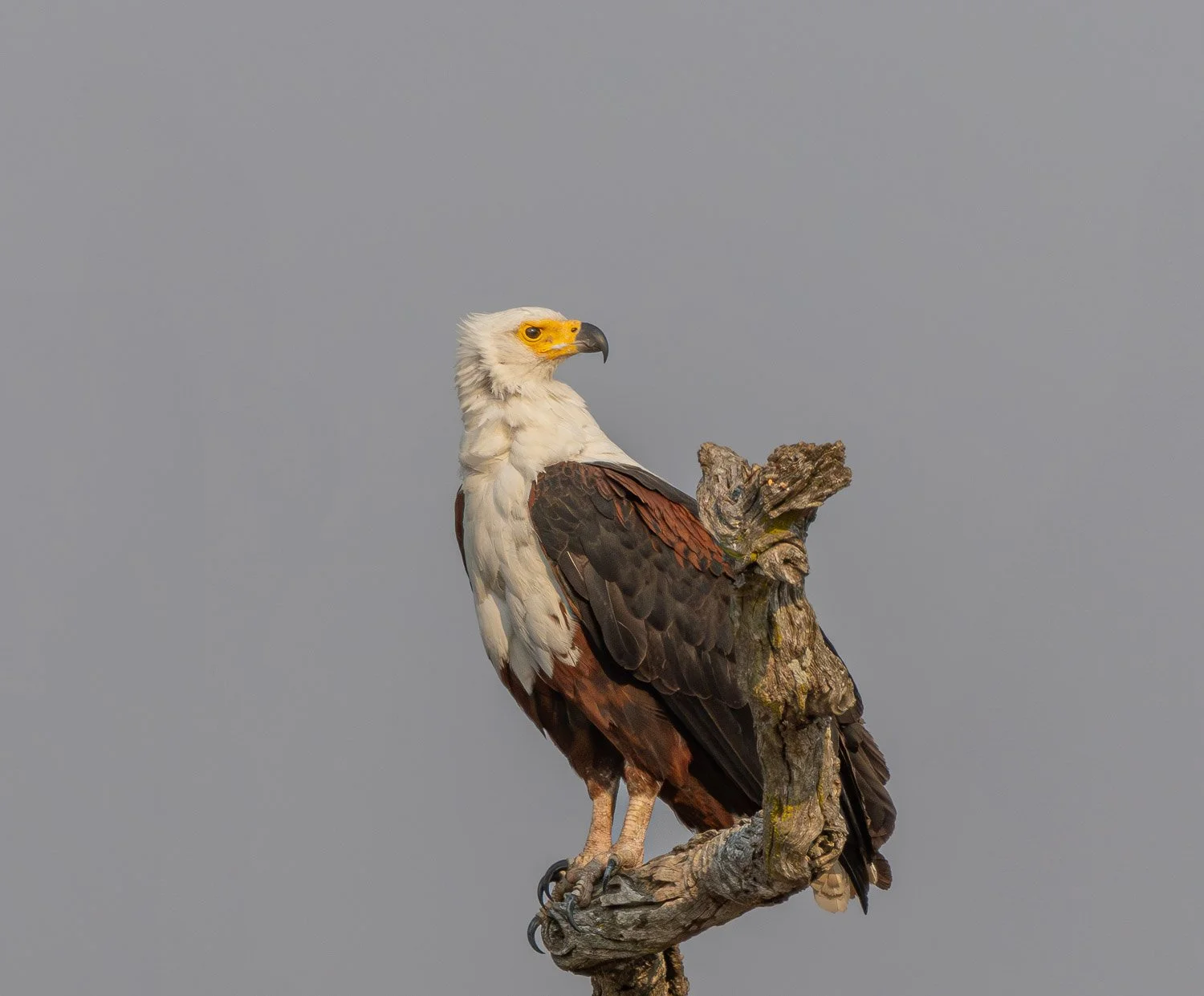
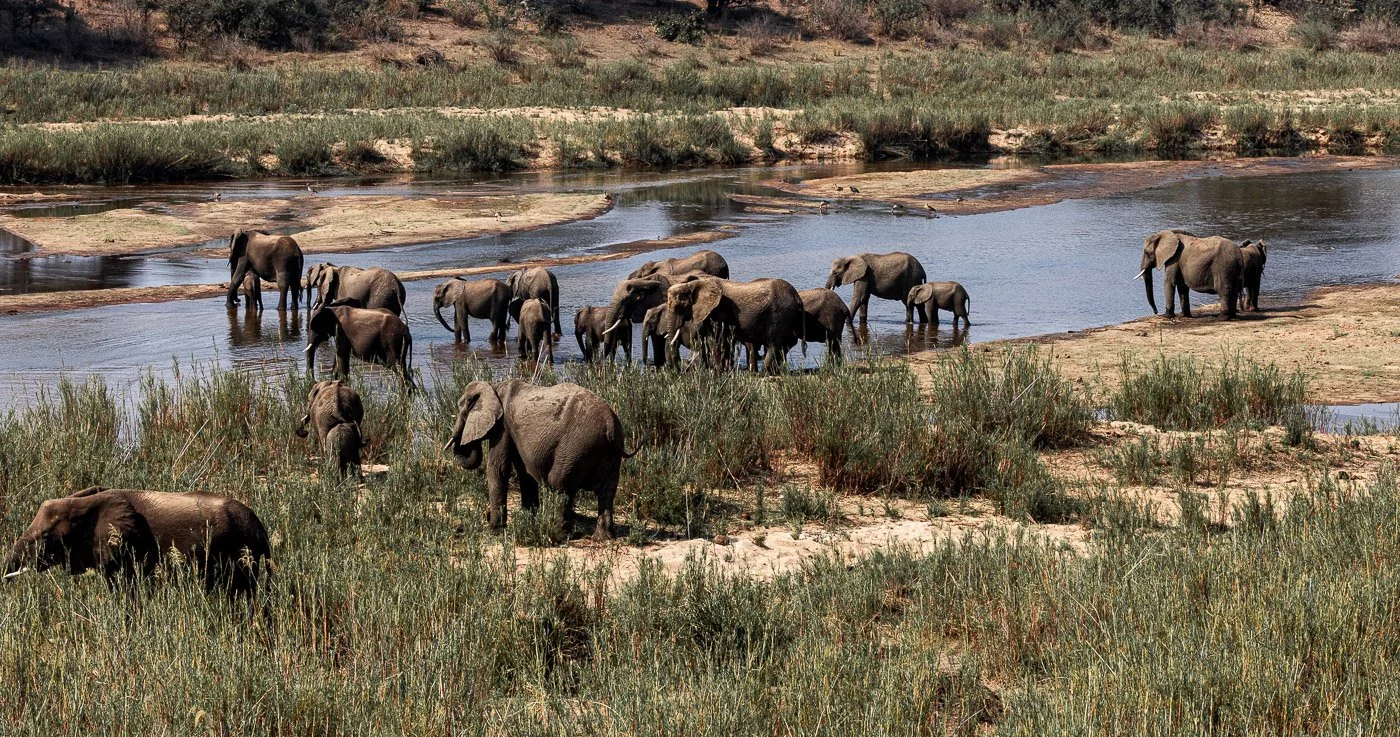
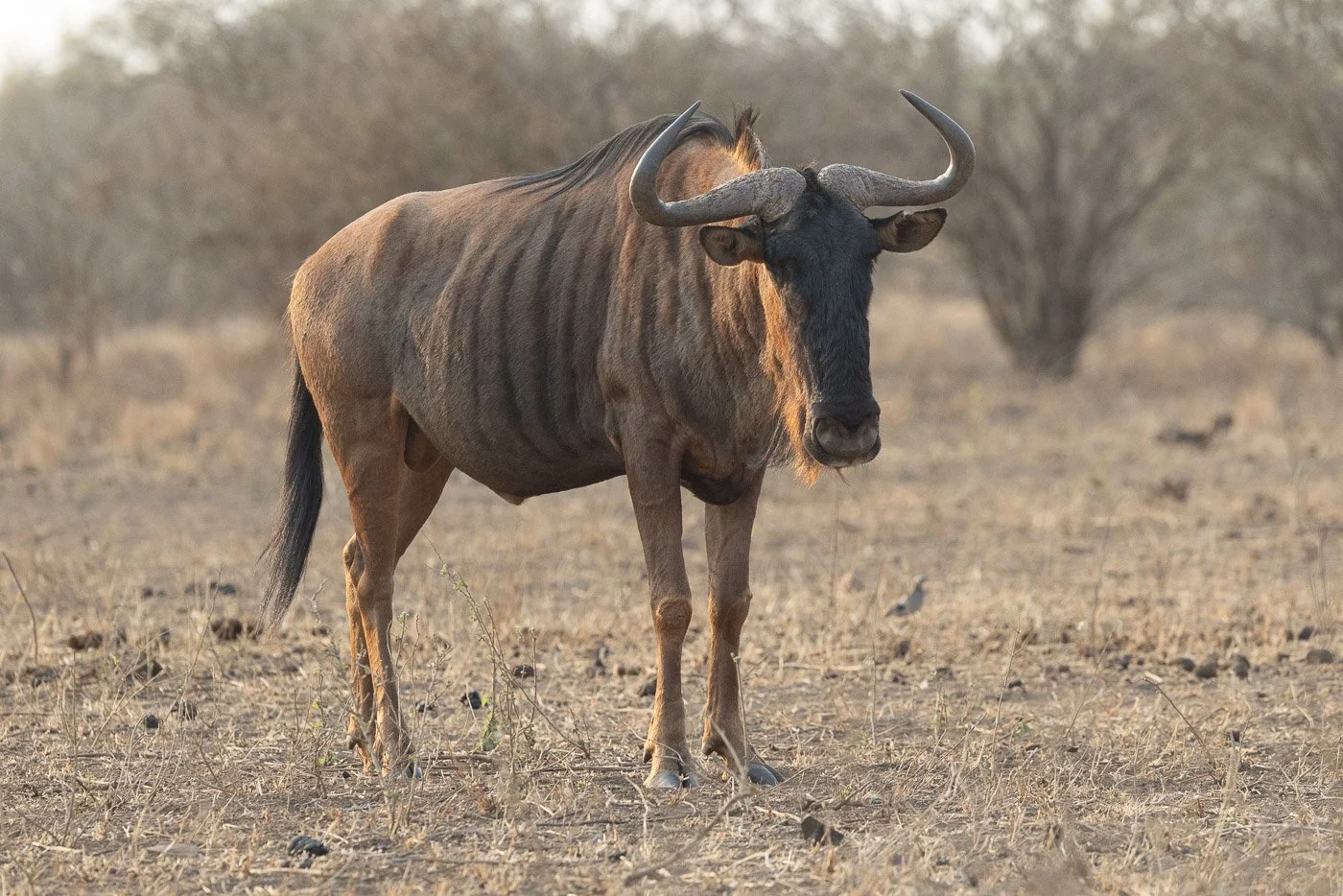
Here is a little gallery of some of the other things we saw within that 3 days.

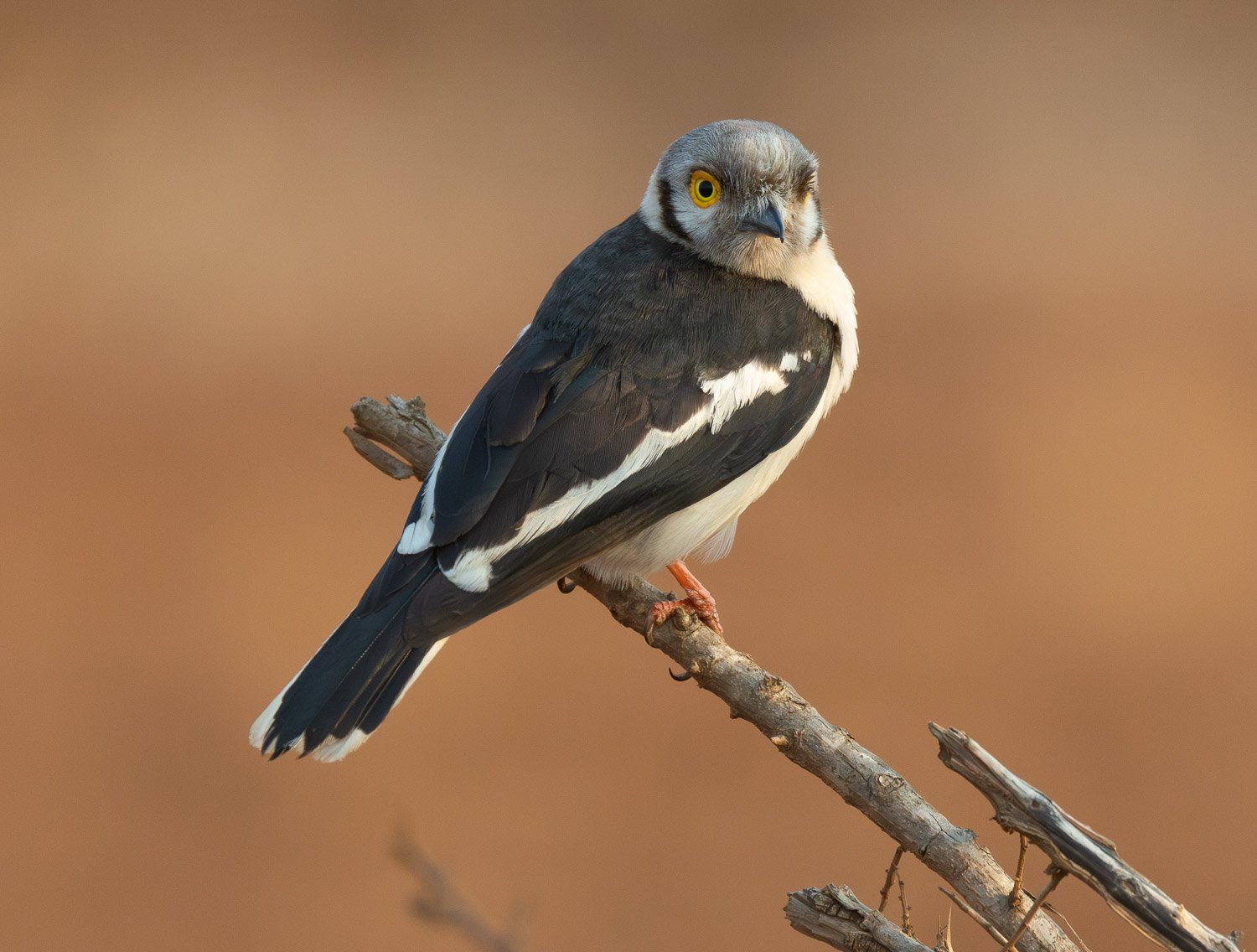
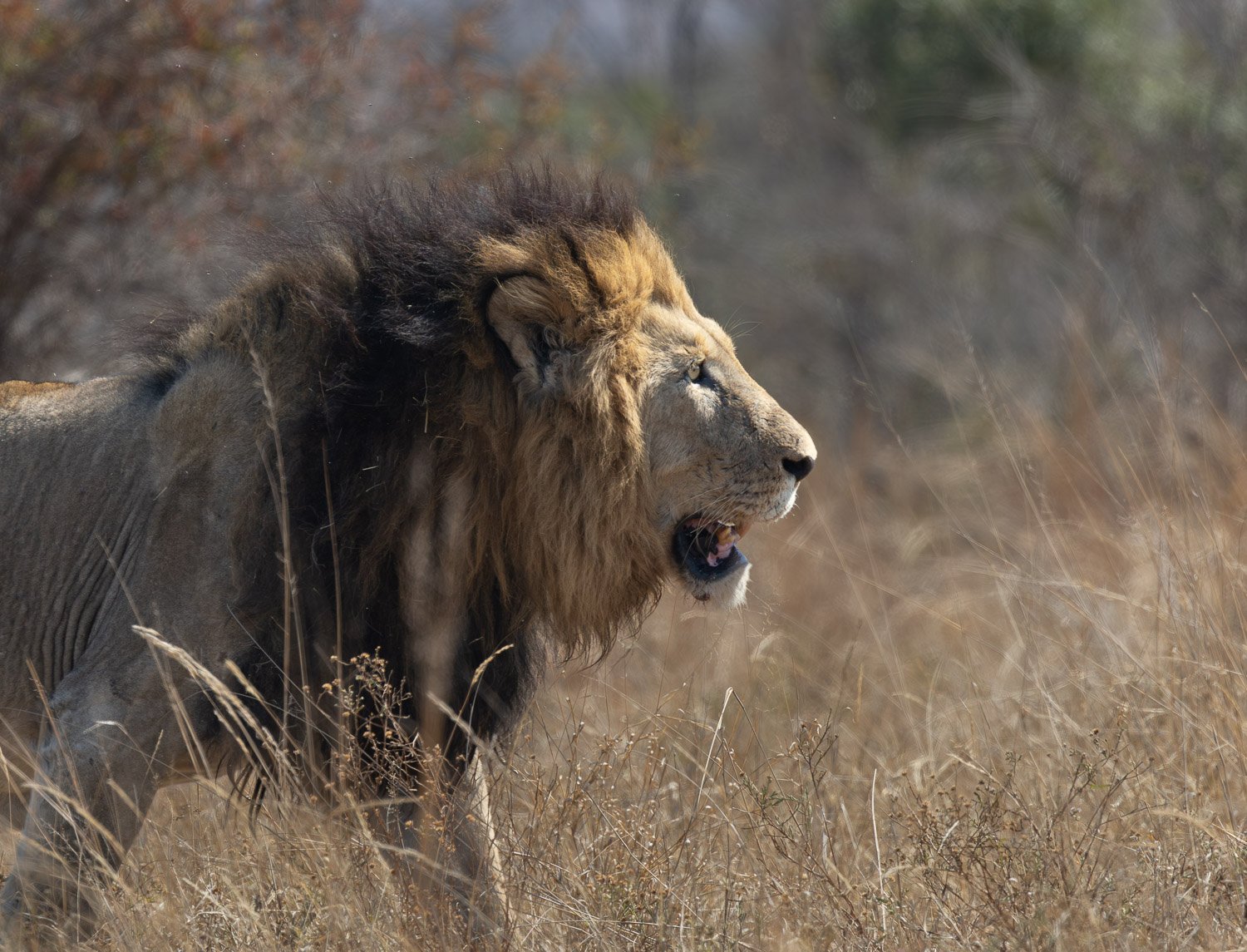




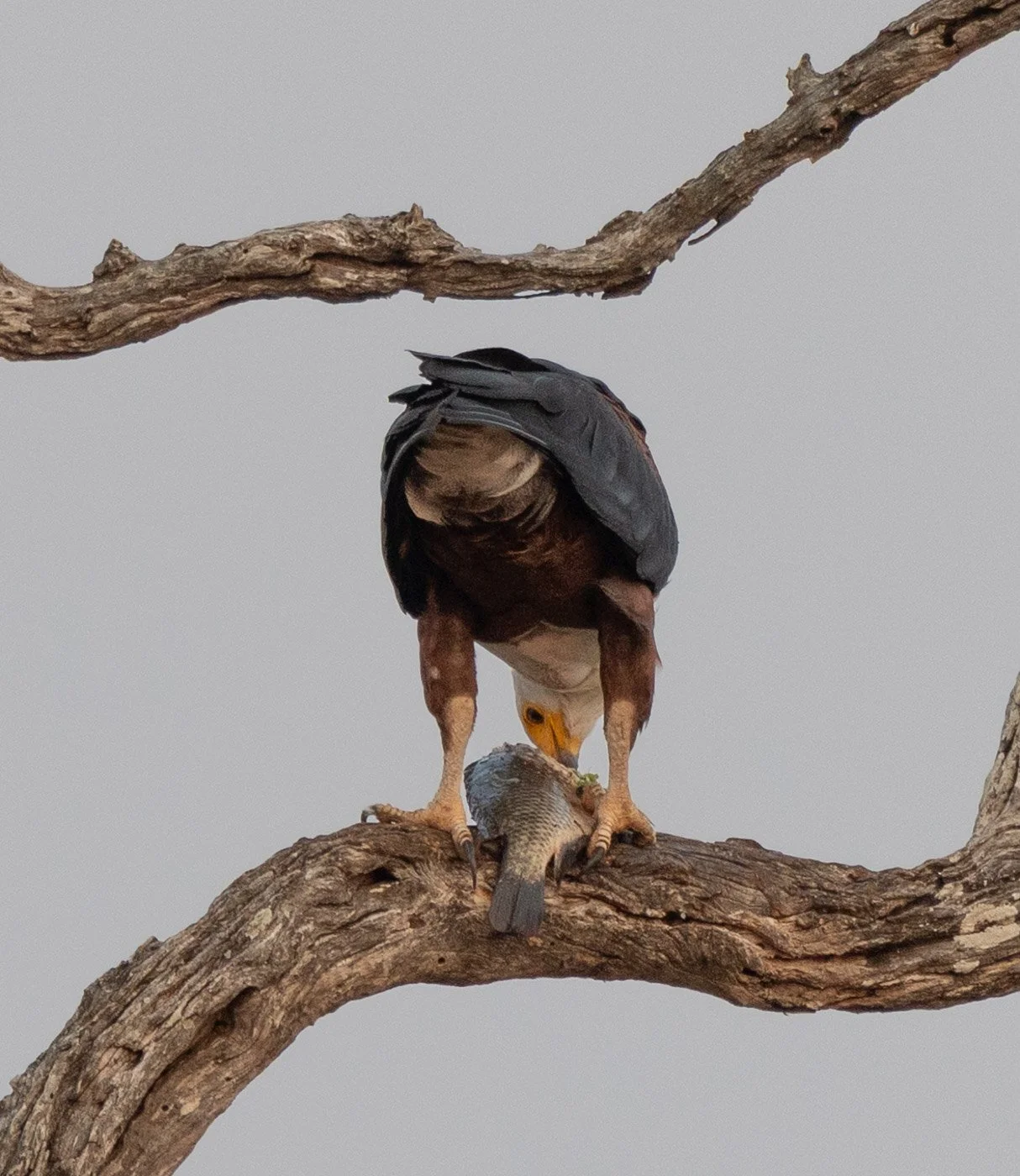

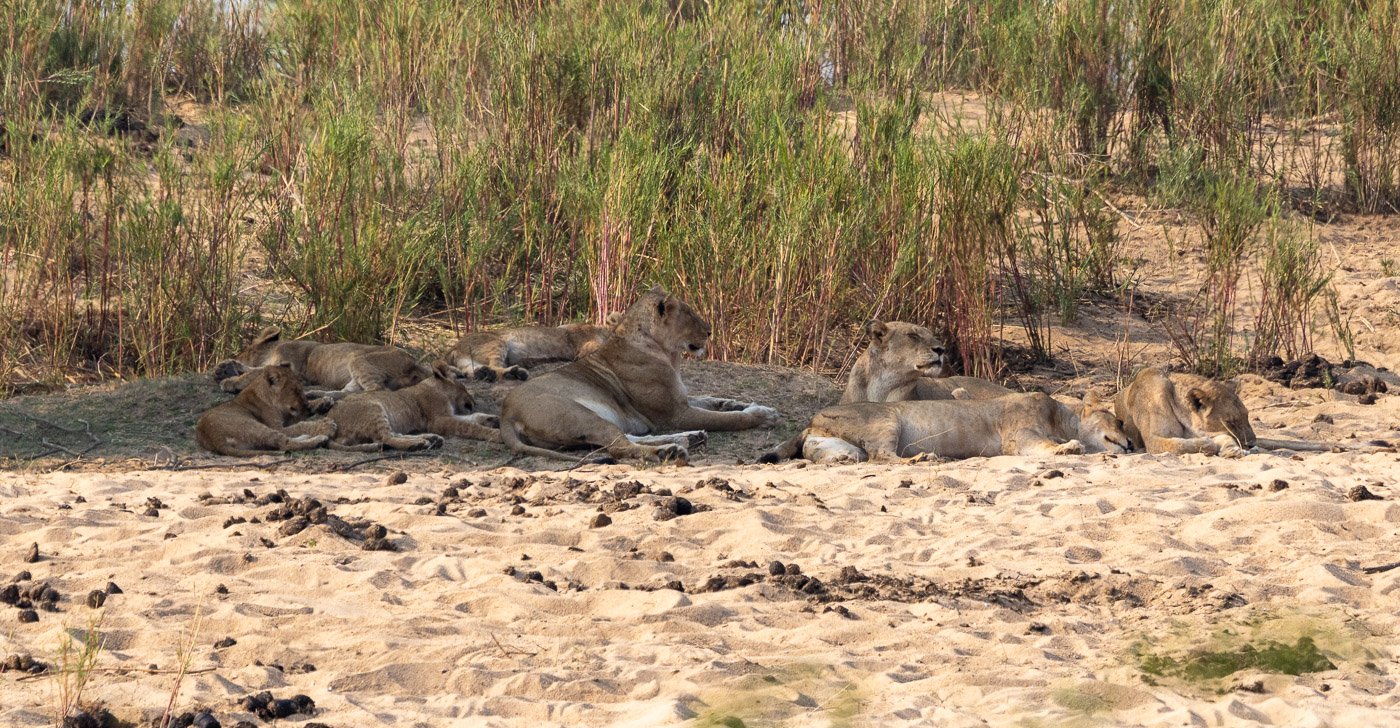
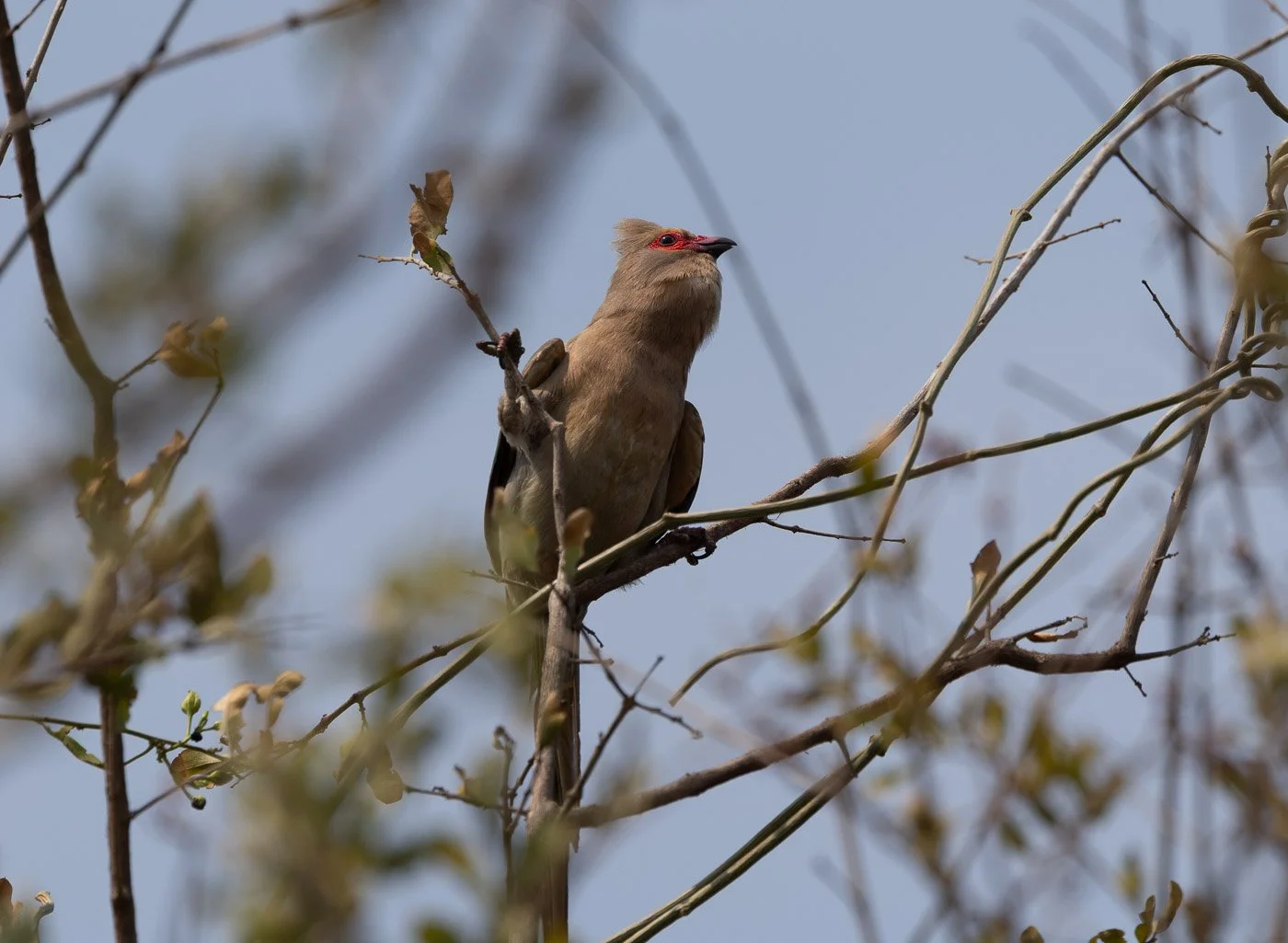
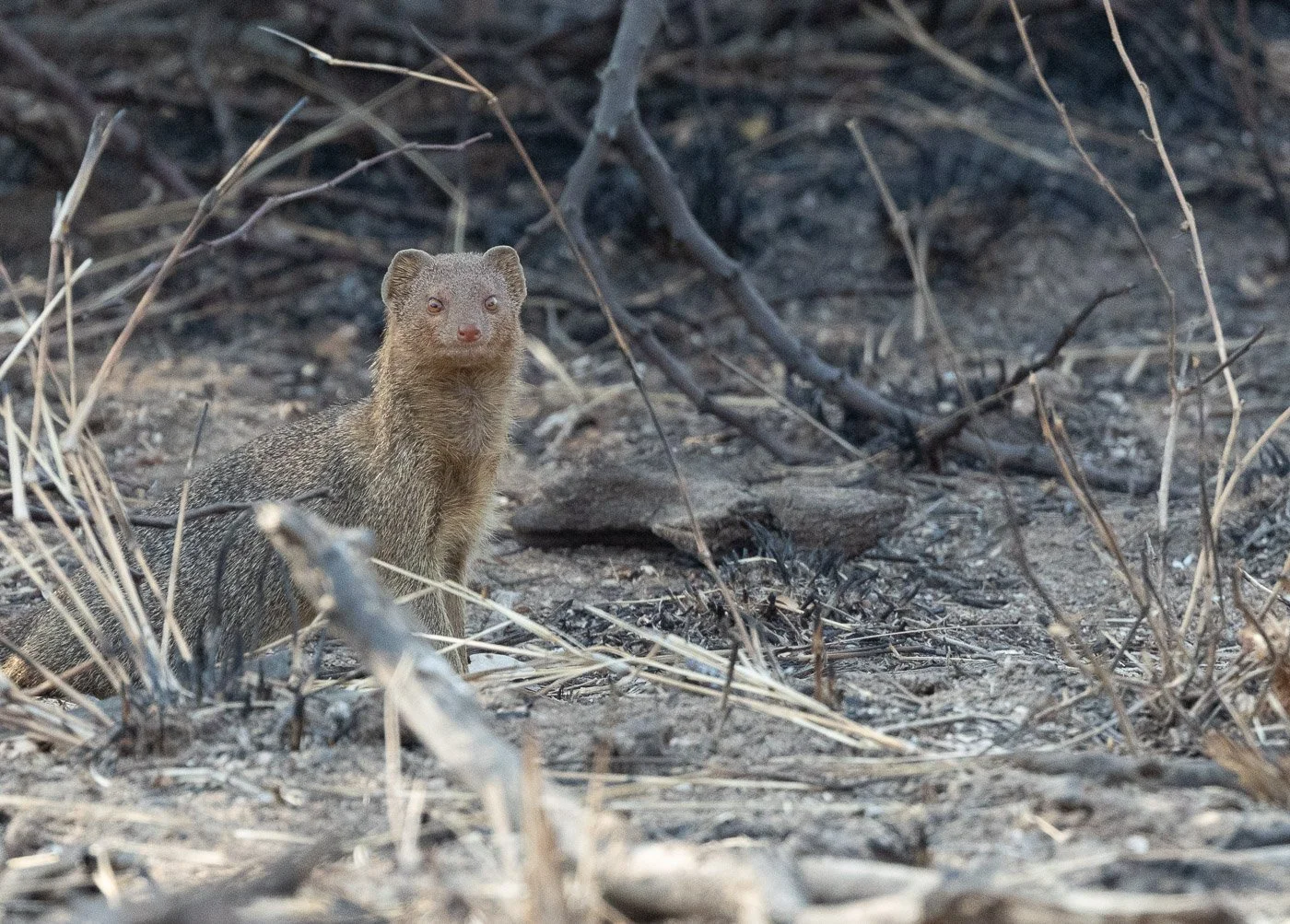


Thanks a lot for reading as usual, and if you can please share with anyone that might be interested, helps with the algorithms etc.
And if you don’t already the please follow me on instagram - @trekadventures
Lastly, the least I can do right now to help rhinos is share a link. If you could spare some pocket change then please give it to Save the Rhino here